


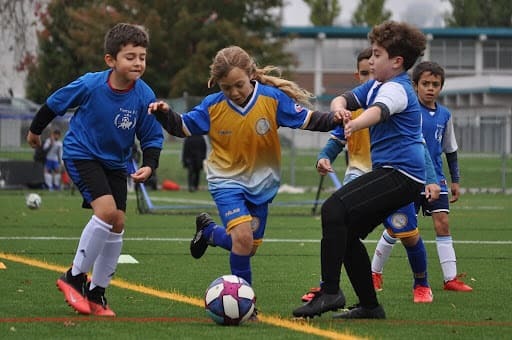
I. Introduction: Why Vancouver Kids Are Kicking Off a Soccer Boom
Soccer, globally recognized as “the beautiful game,” has captured the hearts and competitive spirit of Canadian youth, experiencing a vigorous national rebound in registration numbers following the global health crisis.1 For families in Metro Vancouver, this growth is particularly visible, cementing the Lower Mainland as a massive hub for the sport. British Columbia registered an impressive 74,387 players in the 2023–24 season alone, highlighting a consistent upward momentum in youth involvement.1
This surge in participation is about more than just numbers; it represents a commitment to fostering fundamental skills, building community connections, and inspiring the next generation of Canadian athletic stars.1 However, navigating the complex ecosystem of clubs, academies, leagues, and development models can be challenging for parents seeking the best fit for their child. From understanding the difference between a U5 KickStart program and a U14 BCSPL commitment, the initial choices require clarity and strategic planning.
An important factor influencing this growth in Metro Vancouver is the need for resilient infrastructure. Given the region’s frequent rainy seasons, which often sideline traditional grass fields, investment in high-quality, all-weather turf pitches and indoor facilities becomes crucial for maintaining consistent, year-round momentum in training.1 Programs and clubs that can reliably offer structured, year-round play often stand out, driving up expectations for reliability and often influencing program fees. Furthermore, the emphasis on structured, curriculum-based engagement begins remarkably early, as demonstrated by the market featuring specialized programs for children as young as two years old.2 This focus on high-quality, early childhood physical literacy makes these foundational programs a crucial first step for many families before formal club league play even begins.
The Starting Line: Finding Your Program
To begin exploring the wide variety of providers, programs, and opportunities mentioned in this guide, parents can consult the comprehensive list of providers, including registration links and contact information, at the official activevancouver.ca sports hub: https://activevancouver.ca/provider/?category=sports&type=outdoor-sports&activity=soccer.
II. The Blueprint of BC Soccer: Understanding the Player Development Pathway (LTPD Decoded)
To make an informed decision about youth soccer in BC, it is essential to first understand the structured framework governing development across the province: the Canada Soccer Long-Term Player Development (LTPD) model. This national blueprint segments a player’s journey based on age and developmental readiness, moving systematically from general physical literacy to highly specialized tactical training.4
The Core Structure of LTPD
The pathway defines four distinct stages for youth players:
- Active Start (U4–U6): This introductory stage focuses primarily on developing physical literacy, coordination, and fundamental movement skills through fun and engaging activities. Game formats are small-sided (3v3 or 4v4) with an emphasis on participation and equal opportunities for movement. Parent participation is often encouraged or required in these youngest age groups, as seen in programs like the North Vancouver FC (NVFC) U5 KickStart, which involves technical exercises, fun games, and parental support.4
- FUNdamentals (U7–U9): Players transition into structured soccer activities, introducing basic technical skills such as dribbling and passing. Small-sided game formats, typically 4v4 or 5v5, are maintained, prioritizing maximum ball touches, enjoyment, and equal playing time.4
- Learn to Train (U10–U13): This stage marks a significant step toward technical proficiency and the introduction of early tactical understanding. Game formats increase in size (e.g., 7v7, 8v8, 9v9), and while a league schedule may be created, published standings are typically not maintained, ensuring the focus remains squarely on individual development over immediate match results.4
- Soccer for Life (U14+): At this point, the pathway diverges into distinct streams: continued Community/Recreational participation or intensified Competitive/Performance tracks.4
Decoding the Competitive Ladder: House vs. Elite
The complexity of the Metro Vancouver system arises from the need to distinguish between different levels of play that emerge during and after the Learn to Train stage:
- Grassroots/Community (House League): This level encompasses everything up to U13 and continues as Community (13+) recreational programs. This stream is designed for maximum accessibility, utilizing local scheduling, lower fees, and relying on volunteer coaches. Participation and fun are the paramount objectives.4
- Competitive Streams: These streams are designed for players seeking higher performance and commitment:
- Competitive (Select/Metro/REP): This represents a higher level of programming for U13+ players who play against other clubs, often requiring tryouts, increasing practice frequency to two or three times per week, and involving greater support from paid technical staff.4
- Development (BCSPL): The British Columbia Premier League (BCSPL) represents the highest level of youth competition in the province for players U13 to U18.7 Participation in this league requires the club to hold a Canada Soccer National Youth Club License, which serves as an objective quality and pathway benchmark for elite player development.7
- Performance (League1): This stage is typically focused on adult teams and professional development pathways.4
The transition at approximately the U13 age group represents a fundamental crossroads. Prior to U13, the LTPD prioritizes broad participation and equal play. Moving into the higher streams (Train to Train, Train to Compete) shifts the focus dramatically toward specialization and maximizing athletic potential.4 This transition changes the time commitment, travel requirements, and overall financial expectation placed upon the family and the player.
Table 1 summarizes the age and developmental goals of the BC Soccer Player Pathway.
Table 1: BC Soccer Player Development Pathway (LTPD Summary)
| LTPD Stage | Age Group (Approx.) | Club Stream Equivalent | Game Format Focus | Primary Development Goal |
| Active Start | U4–U6 | Initiation/KickStart (House) | 3v3 or 4v4 (small-sided, no keepers) | Physical literacy, coordination, and fundamental movement. |
| FUNdamentals | U7–U9 | House/First Kix | 4v4 to 7v7 (introduction of rush keepers) | Basic technical skills (dribbling, passing) and team environment. |
| Learn to Train | U10–U13 | House/Select/Metro | 7v7 to 9v9 | Developing technical proficiency, early tactical understanding, and position sense. |
| Train to Compete | U14–U18 | BCSPL/Development/Performance | 11v11 | High-level tactical training, mental toughness, and preparation for advanced pathways. |
| Soccer for Life | U13+ | Community/Adult Leagues | 11v11 | Continued participation and enjoyment of the sport. |
III. Navigating the Field: A Comprehensive Directory of Metro Vancouver Programs
The Metro Vancouver soccer landscape can be divided into three operational tiers based on their primary development function, commitment level, and specialization.
A. Tier 1: Specialized & Foundational Skills Programs (Ages 2–8)
These programs are generally designed for the youngest players, focusing on early skill acquisition and physical literacy outside the traditional community league structure. They offer excellent low-commitment, curriculum-based options.
- Pedalheads Soccer: Formerly known as HappyFeet Vancouver, Pedalheads offers curriculum-based weekly classes and week-long camps for children ages 2 to 8.2 Available across the region, including Vancouver, Burnaby, Langley, North Vancouver, Port Coquitlam, and Richmond, the program uses energetic storytelling and interactive games to ensure maximum ball time and fast, effective learning. They structure learning around age-appropriate levels, offering personalized skill development and a dedicated Adapted program for children on the autism spectrum.2
- Soccer Shots Metro Vancouver: Focused strictly on the 2 to 8 age range, Soccer Shots is dedicated to delivering engaging youth soccer programs through best-in-class coaching and a curriculum that emphasizes age-appropriate soccer skills, character-building, and fun.3
B. Tier 2: The Community Club Ecosystem (House, Select, and Metro)
These large, geographically defined clubs are the primary providers of league play. They offer both high-volume recreational (House) streams and the competitive (Select/Metro) streams that feed into the highest levels of play.
| Community Club | Geographic Area | Program Range & Scale | Key Offerings |
| Vancouver United FC (VanU) | Vancouver | One of the largest clubs in the Lower Mainland, serving approximately 3,000 players from U4 to U18.9 | Offers both recreational and high-performance streams, including adult teams. |
| Coquitlam Metro Ford SC (CMFSC) | Coquitlam/Tri-Cities | Provides high-quality recreational, elite, and BCSPL programs to over 4,500 youth and adults.10 | Offers Initiation through BCSPL streams, Adaptive Soccer, and Academy Programs led by technical staff.10 |
| North Vancouver FC (NVFC) | North Vancouver/North Shore | Comprehensive pathways from U5 KickStart House up to Select, Metro, and BCSPL teams.5 | U5 KickStart focuses on 3- and 4-year-olds with staff-led sessions and parent involvement.5 |
| West Vancouver FC | West Vancouver | Offers a traditional Fall/Winter league season (September to February/March).11 | Known for its structured season and early registration deadlines (February 1st opening).11 |
| Surrey United Soccer Club | Surrey | Runs extensive Fall/Winter league play and dedicated Spring programs.12 | Spring season fees for U8-U18 players are approximately $200.13 |
| Richmond FC | Richmond | Community-focused club offering full range of youth soccer programs. | Standard community club offerings. |
| Burnaby FC | Burnaby | Major provider of recreational and competitive soccer in Burnaby. | Standard community club offerings. |
| ICSF Columbus Football Club | Vancouver/Burnaby | Standard community club, often with a historical development focus. | Standard community club offerings. |
| Coastal FC | South Surrey/White Rock | Large-scale youth soccer organization providing comprehensive player development. | Standard community club offerings. |
| Delta Coastal Selects (DCS) | Delta/South Surrey | Focuses on competitive select-level play across the Delta region. | Select-level pathway specialization. |
| Langley United Soccer Association | Langley | Provides programs for a large geographic area in the Fraser Valley. | Standard community club offerings. |
| New Westminster Soccer Club | New Westminster | Standard community club offerings for the New Westminster area. | Standard community club offerings. |
| Port Coquitlam FC | Port Coquitlam | Standard community club serving the Port Coquitlam region. | Standard community club offerings. |
| Port Moody Soccer Club | Port Moody | Standard community club serving the Tri-Cities area. | Standard community club offerings. |
| Ridge Meadows Soccer Club (RMSC) | Maple Ridge/Pitt Meadows | Services the eastern reaches of Metro Vancouver. | Standard community club offerings. |
C. Tier 3: Professional & Elite Development Academies
These organizations focus on maximizing individual player potential, often through specialized, high-intensity training. These academies either operate the highest competitive club teams (BCSPL) or offer supplemental training intended to prepare players for collegiate or professional careers.
- Whitecaps FC BMO Academy System: Built on a European Club model, this system offers a professional pathway toward the MLS Academy, Rise FC Academy, and collegiate soccer.14 The system includes a coast-to-coast network of BMO Academy Centres and reaches nearly 35,000 participants annually through its various programs.14 Their Prospects Academy is a crucial element, providing supplemental weekly training designed to complement a player’s commitment to their community club while focusing on the high-performance habits and advanced technical and tactical skills necessary for professional pathways.16
- Supra Soccer Academy: A high-level development program for players aged 4–18, Supra aims to prepare participants for collegiate, university, and professional opportunities. It combines progressive technical training with detailed, advanced tactical instructions, and offers specialized programs such as Summer European Coaches Camps.17
- Orix Soccer Academy: Offering year-round training and development for players aged 8–18, Orix aims to prepare individuals for opportunities beyond youth soccer. Notably, Orix explicitly allows players to train and play with them full-time or in combination with other clubs and programs.18 This methodology has a proven track record of producing university, semi-professional, and professional players.18
- VanCity Pro Football Academy: Provides professional-style, high-performance training for focused skill acquisition.
- Sefa Soccer Academy: Concentrates on individual technical excellence and rising kicks development.
- ICSF Columbus Football Club: Though listed under Community, ICSF also focuses on fostering development pathways.
- Field Art FC: Offers unique training specialized in technical artistry and game intelligence.
The structure of the competitive environment clearly indicates that high-achieving players in Metro Vancouver are often enrolled in a multi-club system. They typically maintain registration in a Tier 2 community club (such as CMFSC or VanU) to participate in league games while simultaneously investing in supplemental, high-intensity technical and tactical training provided by Tier 3 professional academies (Supra, Orix) or pathway systems (Whitecaps Prospects).16 This dual enrollment approach, while accelerating development, significantly increases the required commitment and financial outlay.
IV. Commitment and Cost: Analyzing the Investment for Parents
One of the most significant factors in selecting a soccer program is understanding the time and financial commitment, which scales dramatically based on the level of professional support and competition.
A. Seasonal Structure and Planning Ahead
The primary soccer calendar is divided into two parts:
- Fall/Winter League: This main season runs from September through February/March.5 The recreational House League format usually involves one mid-week practice and one weekend game (Boys typically play Saturday, Girls typically play Sunday).11
- Spring/Summer Programs: These programs, running from April to June, or longer summer camps, offer a bridge between seasons.10 These are essential for competitive Select and BCSPL players who train year-round to maintain skill and fitness.6
For parents, preparation is crucial. Registration for the following September Fall/Winter season opens extremely early—often in February or March.5 For example, West Vancouver FC opens registration on February 1st.11 The general deadline is typically around May 31st. Registering after this date (or after an earlier internal cutoff) often incurs a late fee of approximately $50, demonstrating the importance of planning ahead to secure team placement and pricing.10 Clubs like CMFSC offer a $50 discount for players registering before May 15th for the U8-U18 Fall/Winter League.10
B. Cost Breakdown by Program Tier
The financial investment required directly correlates with the amount of specialized coaching, training time, and the level of league play.
| Program Tier | Primary Coaching Model | NVFC Cost Example (Fall/Winter Season) | General Cost Range (Base Annual Fee) |
| Tier 2A: Community House/Rec | Volunteer Coach, occasional staff support. | U6-U18 House: $$$285–$$$300.6 | Moderate ($$$285–$$$400) |
| Tier 2B: Community Competitive | Dedicated paid technical staff, increased training. | U11-U13 Select: $$$510–$$$525.6 | Elevated ($$$450–$$$800+) |
| Tier 3: Elite/BCSPL | Professional licensed staff, year-round program (3x/week). | BCSPL (Jan-Dec): $$$2,250 projected.6 | High ($$$1,000–$$$3,000+ annually) |
This comparison highlights the “Select” premium: the fee for a competitive Tier 2B Select team (e.g., NVFC U11-U13 at $525) is approximately 1.75 times the cost of the House League team.6 This higher fee is an investment in increased field time, specialized coaching expertise, and placement in a highly competitive training environment alongside the top 15%–20% of players in that age group.6
For the highest level, the commitment required for a BCSPL player is comprehensive. The NVFC BCSPL program is year-round, running from January to December, with an approximate projected cost of $2,250.6 This fee typically excludes mandatory travel costs for games requiring ferry crossings or interior travel, as well as external tournament fees, which are managed at the team level, further escalating the total annual financial investment.6 Players at this level must make soccer their primary commitment and are expected to attend all training sessions and games, although participation in complementary sports that support athleticism is encouraged.6
C. Elite Player Identification and Commitment
Placement in competitive and elite streams (Select, Metro, BCSPL) is rarely decided by a single tryout. It is achieved through a structured process of continuous observation. Competitive team formation is determined months in advance, often relying on in-season assessments and invitations sent out by club staff.6 For older competitive teams (U14+ BCSPL), clubs generally do not hold “Open Evaluations”; instead, prospective players are identified through staff scouting, coach communications, and continuous observation during club development programs.6
This emphasis on continuous assessment means that for ambitious players, the selection process is a year-long dialogue, not a single decision point. Families must ensure their children are actively engaged in club-affiliated development academies or programs to remain on the club’s radar for high-performance selection. For players accepted into the competitive pathway, the playing time policy requires understanding: players on BCSPL teams are guaranteed a minimum of 30% playing time, averaged out over the course of each phase, though this minimum standard is removed during intensive Cup Play or playoffs.6 This sets clear expectations about the level of competition and focus on results inherent in the elite streams.
V. Guiding Your Player: The Parent’s Role and Expectations
In Metro Vancouver’s unique soccer culture, which blends high-level competitive ambitions with essential reliance on community volunteerism, the parent’s role is strictly defined by the regulatory bodies.
A. Embracing Positive Sideline Culture
Parents are expected to serve as supportive role models, maintaining positive behavior at all times.19 Maintaining this culture requires clear boundaries between the coaching staff and the parents.
The conflict resolution protocol established by BC Soccer affiliated clubs is stringent: parents are instructed not to ask questions or raise concerns during a game or practice.19 Any technical or tactical questions, or broader concerns about a child’s development or placement, must be addressed by scheduling a formal appointment with the coach.19 This protocol serves to protect the integrity of the coaching staff’s decisions, reduce pressure on young players, and ensure consistency during critical training and game moments.
Furthermore, it is recognized that conflicting agendas—such as a parent solely focused on professional success while the child is primarily focused on fun—can create stress and conflict.19 Successful navigation of the system requires aligning the goals of the player, the coach, and the parents, especially as the player moves into the more competitive and demanding LTPD stages.
B. The Essential Role of the Volunteer Parent
The backbone of the accessible House League structure is the volunteer parent. The lower registration cost (e.g., the $300 NVFC House League fee) is predicated on this community support.6 Volunteering offers parents the chance to gain valuable experience, connect positively with other families, and directly support the growth of local youth sports.20
For the youngest age groups (U5/U6), parent involvement is not just encouraged but often integral to the program delivery. For example, the NVFC U5 KickStart program requires sessions based on parent participation, offering parents the opportunity to volunteer as assistant coaches and team managers to support the club’s professional staff in delivery.5 While parents should offer assistance if they are able, they should also be prepared if the coach declines the offer, respecting the coach’s autonomy in leading the team.19
This structural need creates a distinct dynamic: parents are the essential logistical and financial engines of the club, yet they are expected to completely defer technical and tactical authority to the licensed coaches. Understanding and respecting this boundary is key to a positive experience in BC youth soccer.
VI. Conclusion: Preparing for the Next Kick-Off
Choosing the correct soccer program in Metro Vancouver requires aligning the child’s age and developmental stage with the family’s commitment level and financial capacity.
A. A Framework for Decision Making
The analysis of the Metro Vancouver environment leads to a clear tiered framework for decision-making:
- If the goal is FUN and SKILL INTRODUCTION (U2-U8): Focus on Tier 1 programs such as Soccer Shots or Pedalheads Soccer, or the U5/U6 House League programs offered by community clubs (e.g., NVFC KickStart). These offer a low-cost, low-commitment, and curriculum-focused start.
- If the goal is COMMUNITY and PARTICIPATION (U7-U18): Enroll in the local club’s House League stream (Tier 2A). This offers moderate cost, moderate commitment (one practice, one game), and is primarily volunteer-driven, emphasizing broad access and enjoyment.
- If the goal is HIGH PERFORMANCE and the PATHWAY (U10+): Prepare for Select/Metro (Tier 2B) or BCSPL/Academy (Tier 3). This necessitates high financial and time commitment, year-round play, professional staff engagement, and awareness of very early registration and team formation deadlines (starting in February/March for the fall season).
Table 2 synthesizes the primary characteristics of the different program tiers available in the region.
Table 2: Metro Vancouver Youth Soccer Program Tier Comparison
| Program Tier | Primary Goal | Typical Commitment (Per Week) | Estimated Annual Fee Range (Base) | Key Providers |
| Tier 1: Foundational/Specialized | Introduction to soccer skills, physical literacy (Ages 2-8). | 1 session (45-60 min) or week-long camps. | Low ($$$150–$$$400 per session/season) | Soccer Shots, Pedalheads Soccer |
| Tier 2A: Community House/Rec | Fun, maximum participation, local league play (U5-U18). | 1 practice + 1 game (Volunteer Coach). | Moderate ($$$285–$$$400 for Fall/Winter) | VanU, CMFSC, NVFC, Richmond FC (Rec) |
| Tier 2B: Community Competitive | Higher skill, divisional play (Select/Metro); early tactical instruction. | 2-3 practices + 1 game (Paid Staff support). | Elevated ($$$450–$$$800+ for Fall/Winter) | NVFC Select, CMFSC Select, West Vancouver FC |
| Tier 3: Elite/BCSPL/Academy | Year-round, high-performance pathway towards professional or collegiate soccer. | 3+ training sessions + games/travel (Professional Staff). | High ($$$1,000–$$$3,000+ annually) | Whitecaps FC Academy, Supra, Orix (BCSPL Clubs) |
B. Final Checklist for Vancouver Parents
To secure the best experience for a player in Metro Vancouver, a proactive approach is required:
- Confirm Registration Dates: Check club websites between February and May to secure early bird rates and team placement for the Fall/Winter season.5 Missing these early deadlines can result in late fees and potentially missing a competitive roster spot.11
- Verify Coaching Structure: Determine if the team is volunteer-led (cost-effective, house league) or staff-led (higher cost, specialized Select/Academy training). This choice directly impacts the cost and development focus.
- Embrace the LTPD Model: Understand that the developmental priorities shift fundamentally at U13. For younger players, focus on technical growth and enjoyment, adhering to the LTPD principle that development precedes winning.
- Encourage Complementary Training: For ambitious players, consider supplementing community club enrollment with specialized technical training offered by Tier 3 academies, which can accelerate individual skill development.18
Works cited
- Rising Kicks: Youth Soccer Registration Trends in Canada and Beyond, accessed October 28, 2025, https://sefasoccer.com/rising-kicks-youth-soccer-registration-trends-in-canada-and-beyond/
- Soccer Camps & Classes for Kids | Pedalheads Soccer, accessed October 28, 2025, https://pedalheads.com/en/soccer
- Children’s Soccer Experience | Metro Vancouver, BC, accessed October 28, 2025, https://www.soccershots.com/metrovancouver/
- Club Licensing | BC Soccer Association, accessed October 28, 2025, https://www.bcsoccer.net/resources/club-licensing/
- Youth Teams – North Vancouver FC, accessed October 28, 2025, https://nvfc.ca/registration/
- North Vancouver Football Club – North Vancouver FC, accessed October 28, 2025, https://nvfc.ca/
- Competitions | BC Soccer Association, accessed October 28, 2025, https://www.bcsoccer.net/competitions/
- Soccer Shots: Home, accessed October 28, 2025, https://www.soccershots.com/
- Vancouver United FC | Game, Club, Community | Vancouver’s …, accessed October 28, 2025, https://vancouverunitedfc.com/
- Coquitlam Metro-Ford Soccer Club | Soccer for Life | BCSPL …, accessed October 28, 2025, https://cmfsc.ca/
- Registration for the Sept 2025 Feb 2026 season – West Vancouver Football Club, accessed October 28, 2025, https://westvanfc.com/regdetail
- Cloverdale | Registration – Surrey United Soccer Club, accessed October 28, 2025, https://www.surreyunitedsoccer.com/registration
- Spring Soccer Season | Games | League – Surrey United Soccer Club, accessed October 28, 2025, https://www.surreyunitedsoccer.com/springsoccerseason
- Our Values – Vancouver Whitecaps FC, accessed October 28, 2025, https://www.whitecapsfc.com/club/structure
- Academy | Vancouver Whitecaps FC, accessed October 28, 2025, https://www.whitecapsfc.com/academy/
- Academy – Whitecaps FC Youth – Whitecaps FC Camps, accessed October 28, 2025, https://whitecapsfcyouth.com/academy/
- Soccer Academy Vancouver | Online Soccer Academy | Canada Soccer Academy, accessed October 28, 2025, https://supraacademy.ca/
- Orix Soccer Academy | The Future Begins Here, accessed October 28, 2025, https://orixsoccervancouver.ca/
- The Educated Parent – BC Soccer Association, accessed October 28, 2025, https://www.bcsoccer.net/media/aadpkodi/theeducatedparent.pdf
- Volunteer at the PGYSA – Prince George Youth Soccer Association, accessed October 28, 2025, https://pgysa.bc.ca/volunteer