


By Alex V, Active Vancouver
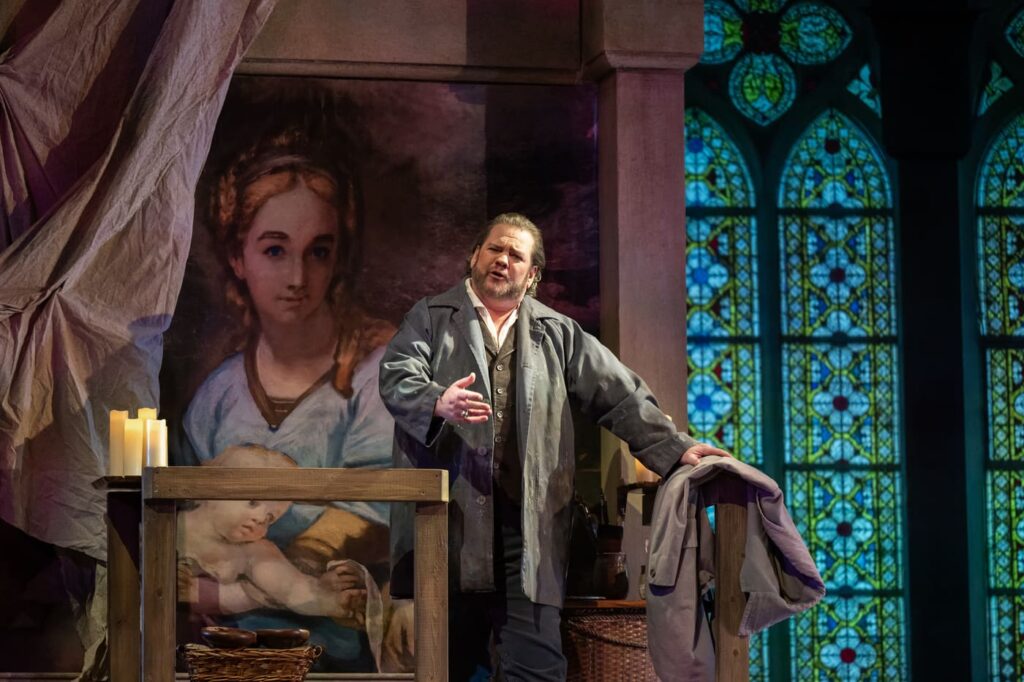
Main photo: David Pomeroy as Mario Cavaradossi in Vancouver Opera’s 2026 production of Tosca. Photo by Emily Cooper.
I attended the opening night of Vancouver Opera’s Tosca at the Queen Elizabeth Theatre on October 24. This is a traditional, beautifully lit production of one of opera’s great thrillers, and it is also a very good first opera if you have never been. Only two performances remain, so here is what to know before you go.
Tosca at a Glance
| Date | Time | Venue |
|---|---|---|
| Thursday, October 29, 2026 | 7:30 PM | Queen Elizabeth Theatre, 630 Hamilton St |
| Sunday, November 1, 2026 | 2:00 PM | Queen Elizabeth Theatre, 630 Hamilton St |
Regular adult tickets range from $90 to $280. $25 student rush tickets and Opera Under 40 offers are also available (see Vancouver Opera’s discounts page).
Puccini and Tosca: A Short History
Giacomo Puccini was born in Lucca, Italy, in 1858 and became the leading Italian opera composer of his generation, the heir to Verdi. His run of hits includes Manon Lescaut, La bohème, Tosca, and Madama Butterfly. He died in 1924 with Turandot unfinished, and another composer completed it.
Tosca premiered on January 14, 1900, at the Teatro Costanzi in Rome. The libretto is by Luigi Illica and Giuseppe Giacosa. They adapted it from La Tosca, an 1887 play by French dramatist Victorien Sardou, written as a vehicle for the actress Sarah Bernhardt. Critics were cool at first, but audiences adored it, and more than a century later it remains one of the most performed operas in the world.
The setting is real. The story unfolds in Rome in June 1800, amid the political and military turmoil of the Napoleonic wars, in actual landmarks: the church of Sant’Andrea della Valle, the Palazzo Farnese, and the fortress of Castel Sant’Angelo.
The Plot of Tosca (Spoilers Ahead)
The story takes place over roughly 24 hours and centres on three people: Floria Tosca, a celebrated opera singer; her lover Mario Cavaradossi, a painter with revolutionary sympathies; and Baron Scarpia, Rome’s sadistic chief of police.
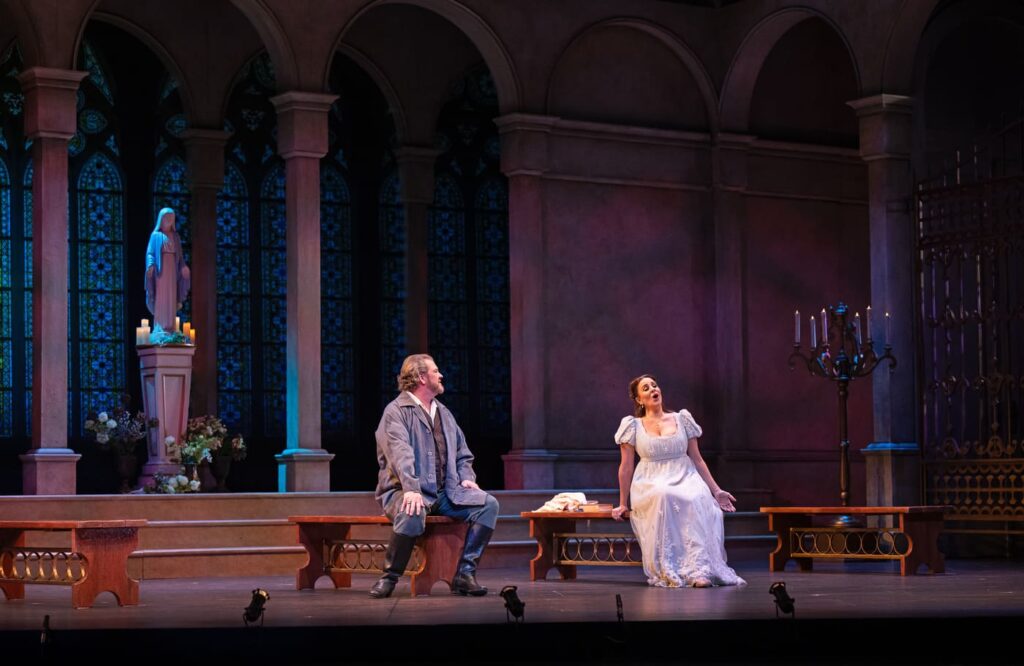
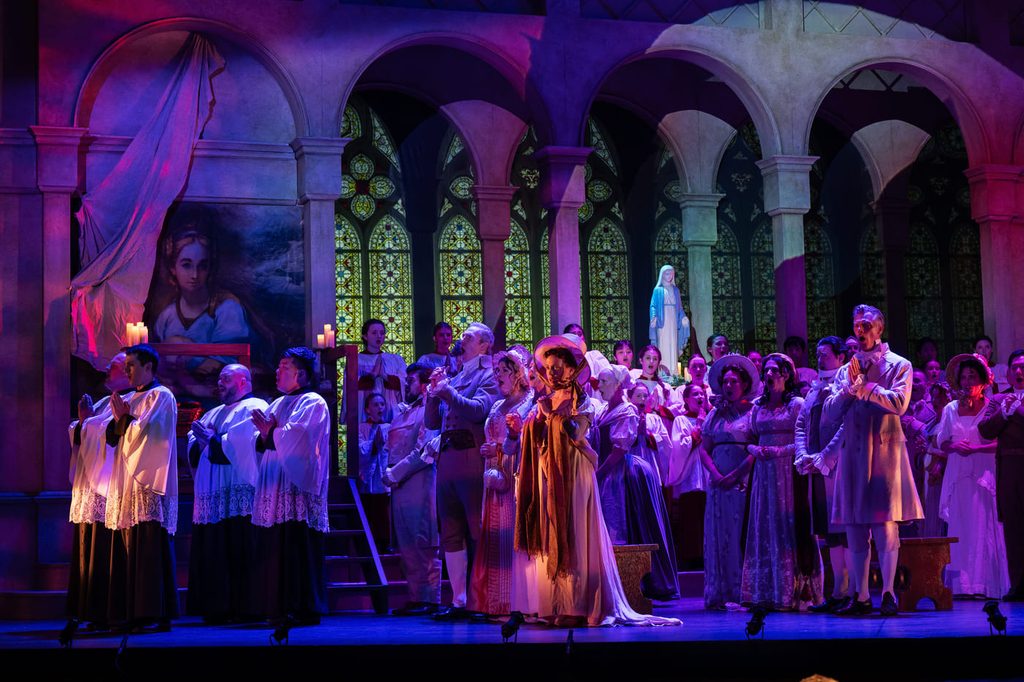
First act. Cavaradossi is painting in a church when Cesare Angelotti, an escaped political prisoner, bursts in. Cavaradossi agrees to hide him. Tosca arrives and grows suspicious about her lover’s secrecy. Scarpia then enters, hunting the fugitive, and sees that Tosca’s jealousy is a weapon he can use. The act ends with a grand Te Deum while Scarpia vows to hang Cavaradossi and possess Tosca.
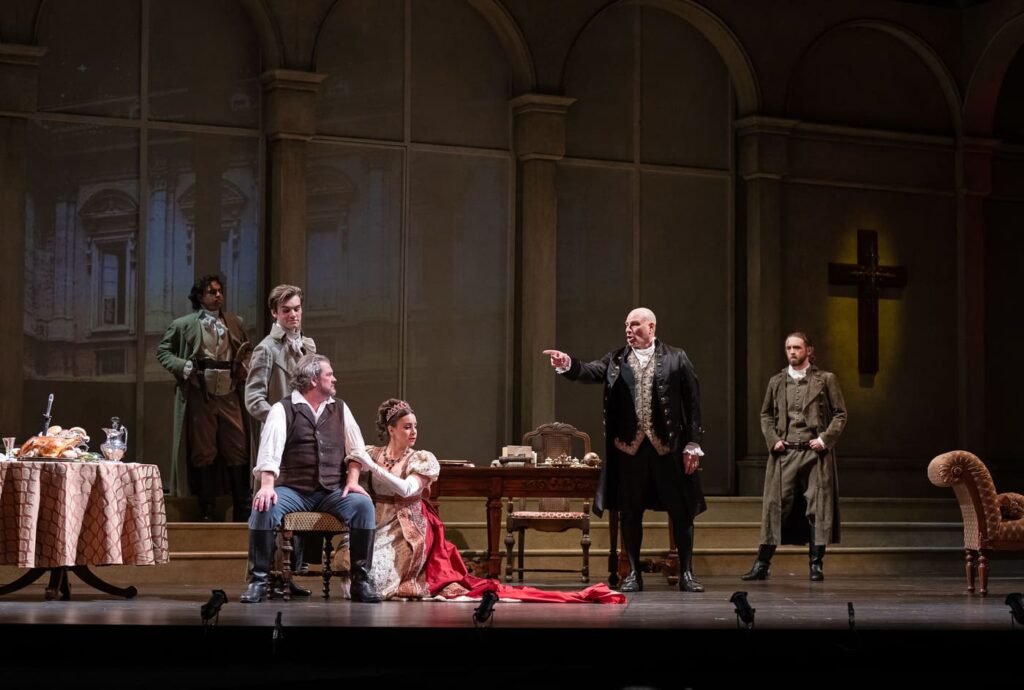
Second act. In Scarpia’s apartments, Cavaradossi is tortured within Tosca’s hearing. To stop it, she gives up Angelotti’s hiding place. Scarpia then offers a bargain: she can save her lover’s life if she gives herself to him. Tosca sings her great prayer, “Vissi d’arte” (“I lived for art”), then pretends to agree. Once Scarpia has written a safe-conduct pass, she picks up a knife and kills him.
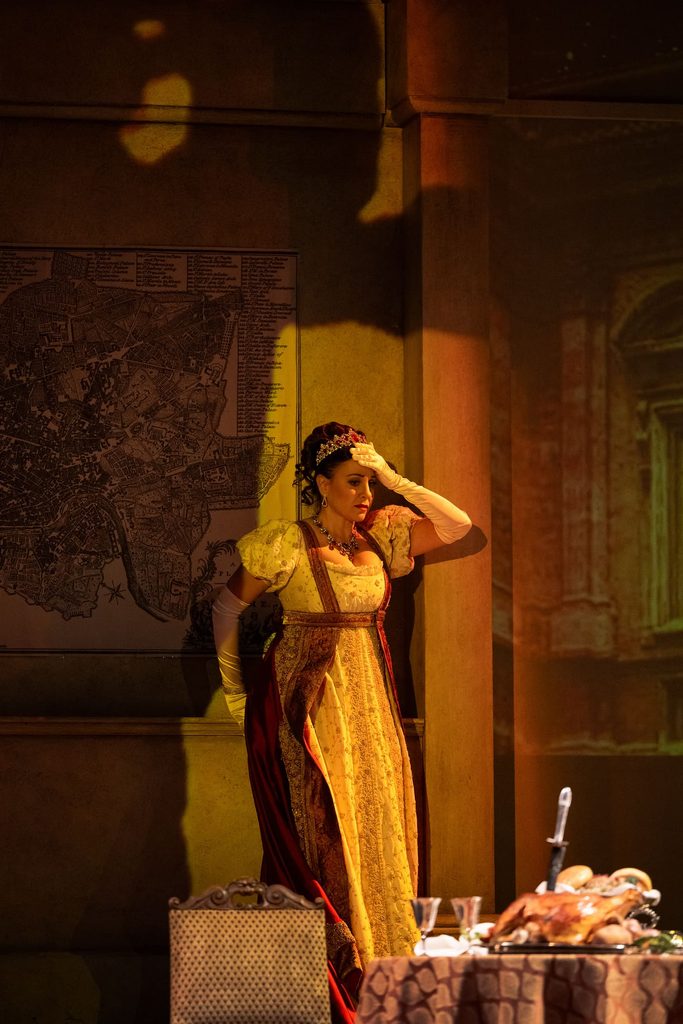
Third act. At dawn on the ramparts of Castel Sant’Angelo, Cavaradossi awaits execution and sings “E lucevan le stelle,” remembering his love. Tosca arrives with the pass and tells him the firing squad will use blanks. It will not. Scarpia has deceived her to the end. Cavaradossi falls, and when soldiers come for Tosca, she leaps from the parapet.
What to Expect: No Overture, Two Parts, Italian Surtitles
There is no overture. Puccini starts the drama almost at once, with a few violent orchestral chords that announce Scarpia before anyone sings a note. The ending is just as abrupt: Tosca jumps, the orchestra crashes through a final statement of Cavaradossi’s melody, and the curtain falls within seconds. It is startling, and very effective.
Puccini wrote Tosca in three acts, but Vancouver Opera presents it in two parts with a single intermission. The singing is in Italian, with English subtitles projected above the stage, so you can follow every line.
Review: Vancouver Opera’s Tosca
A Genuinely Classical Production
I will start with a confession. Vancouver Opera’s promotional materials for this show have a sleek, modern look, and I was afraid I was walking into a contemporary reinterpretation, with Rome swapped for some present-day setting. I was relieved to find a good, old-fashioned opera, set in its own period and played straight. The marketing undersells what is on stage. A company this confident in its production should show it.
The Singing
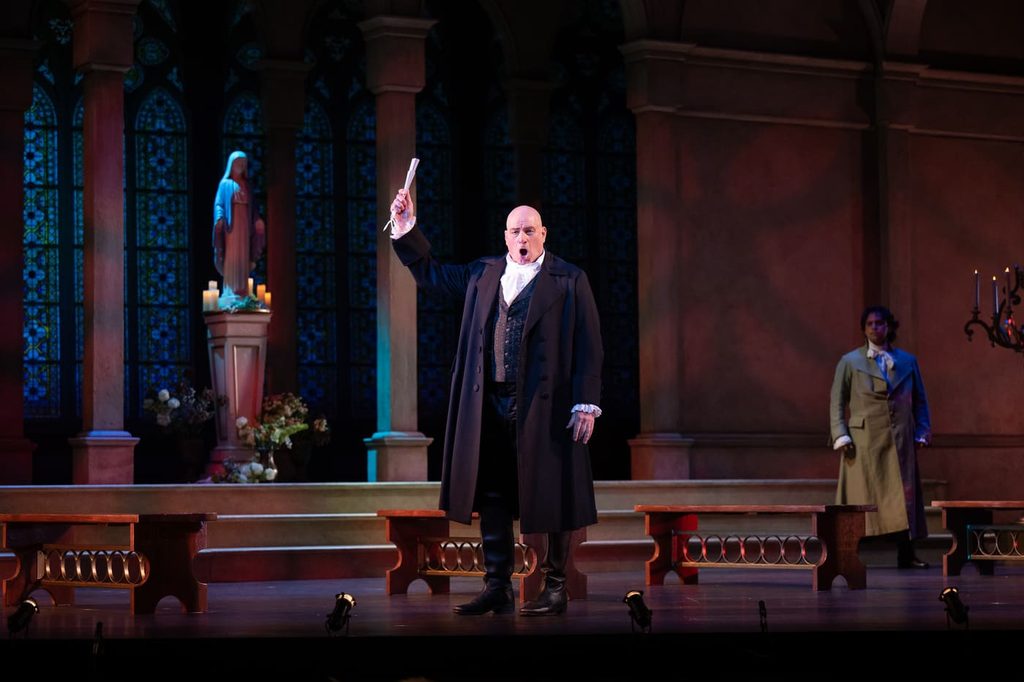
Critics have singled out the all-Canadian principal cast, praising Joyce El-Khoury’s Tosca, David Pomeroy’s Cavaradossi, and Gregory Dahl’s Scarpia. I agree with all three. For my ears, though, the villain has the best voice of the night. Dahl’s Scarpia is menacing and rich without tipping into pantomime, which is hard to do with a character this repellent. Everyone who sings an aria on opening night has a lot to live up to, and the audience rewarded each one with long, warm applause. The children’s chorus is a lovely touch, and a welcome contrast to the cruelty of the story.
Sets, Light, and Shadow
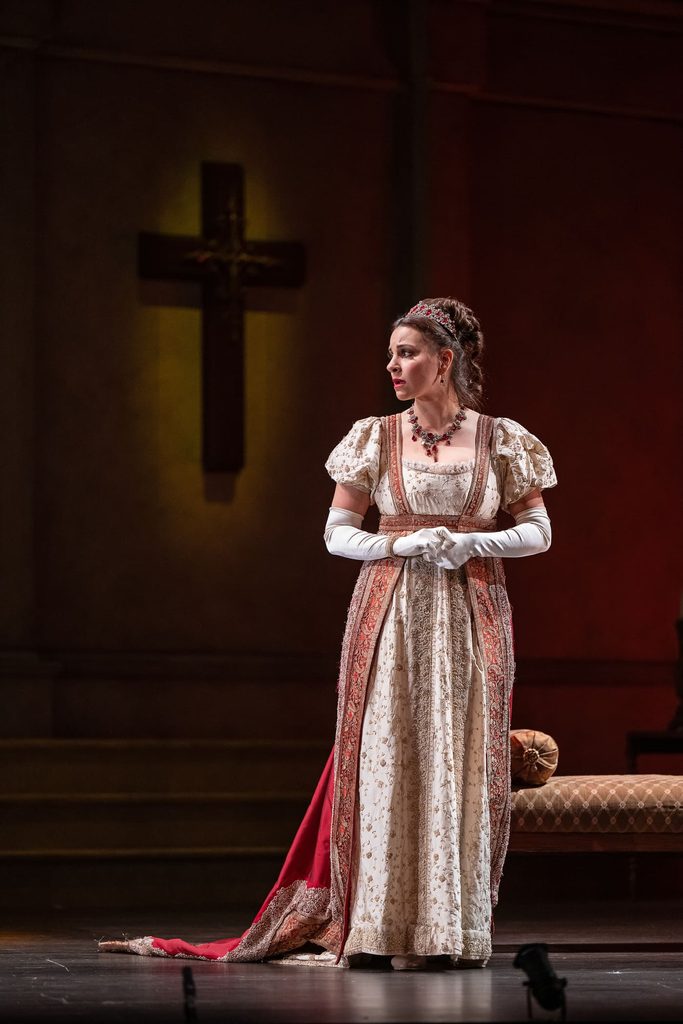
The stage is the second star. Scott Reid’s sets use dramatic, angled walls, and Michael Walton’s lighting works with them throughout. The decorations are rich and detailed, and the lighting does remarkable work with shadows. During the torture scene, the action is implied rather than shown, and the shadows tell you everything you need to know. In Scarpia’s rooms, warm candlelight is cut with hints of blood red. It is the best use of light and dark I have seen at the Queen Elizabeth in a long time.
The Orchestra and the Pace
Vancouver Opera has its own orchestra, and it is a strength. Music director Jacques Lacombe conducts. The playing is lush without ever hurrying the singers.
Opera does not care about your attention span, and that is its greatest gift.
The pace is slow by modern standards, and I mean that as praise. Opera does not care about your attention span, and that is its greatest gift. If your thumb has been trained by TikTok to swipe every eight seconds, two and a half hours of unhurried storytelling in a dark theatre is about the best detox available in the city.
Ticket Prices and How to Pay Less
My biggest disappointment has nothing to do with what happens on stage. Regular adult tickets run from $90 to $280, which is a steep evening out, especially for someone trying opera for the first time. The good news is that Vancouver Opera offers ways to pay far less. Student rush tickets start at $25 and are released shortly before each performance, and the company also runs an Opera Under 40 campaign for younger audiences. Eligibility and details are on the discounts page. Because these offers sit outside the headline price range, they are easy to miss, so check before you buy.
The good news is that Vancouver Opera offers ways to pay far less.
I would still like to see more affordable options for everyone else: families, newcomers, and anyone over 40 without a student card. Art this good should be within easy reach in Vancouver. To its credit, the company also offers the free Opera in the Park concert each summer.
Final Verdict: 8/10
This is an assured, handsome, emotionally gripping Tosca, with a strong cast, a fine orchestra, and some of the best stage lighting I have seen locally. It loses a little for the steep full-price tickets, though the student and under-40 discounts soften that, and for a marketing campaign that does not match the show. If you can afford a ticket, go. If you have never seen an opera, this is the one.
Tosca, Vancouver Opera, Queen Elizabeth Theatre. Remaining performances: Thursday, October 29 at 7:30 PM and Sunday, November 1 at 2:00 PM. Tickets at vancouveropera.ca.