


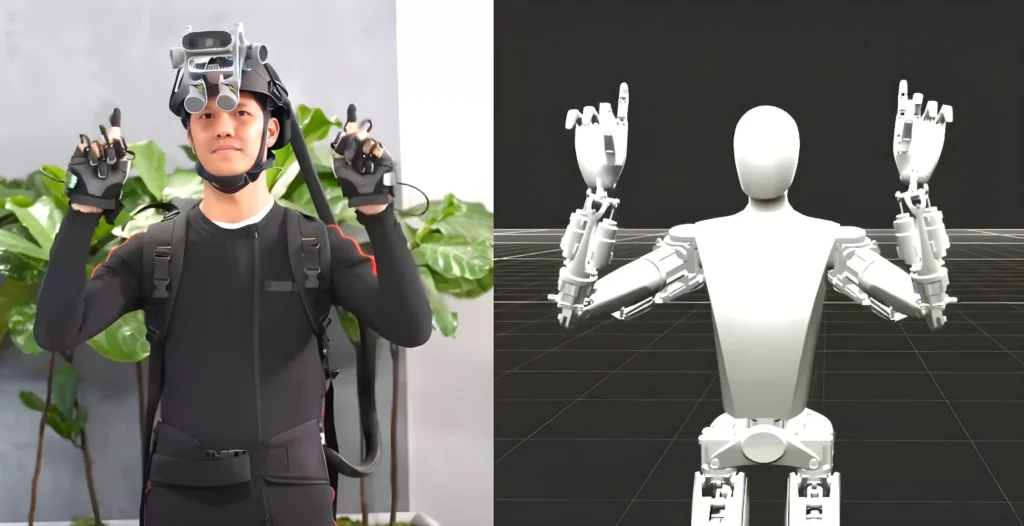
Tesla is quietly building one of the most significant robotics manufacturing operations in Canada, and it is happening right here in Metro Vancouver. A string of new job postings shows the company staffing up in Langley, BC, for its Optimus humanoid robot program, including roles like Robotics Actuator Geartrain Test Engineer, manufacturing engineers focused on geartrain assembly, and internships aimed at engineering students.
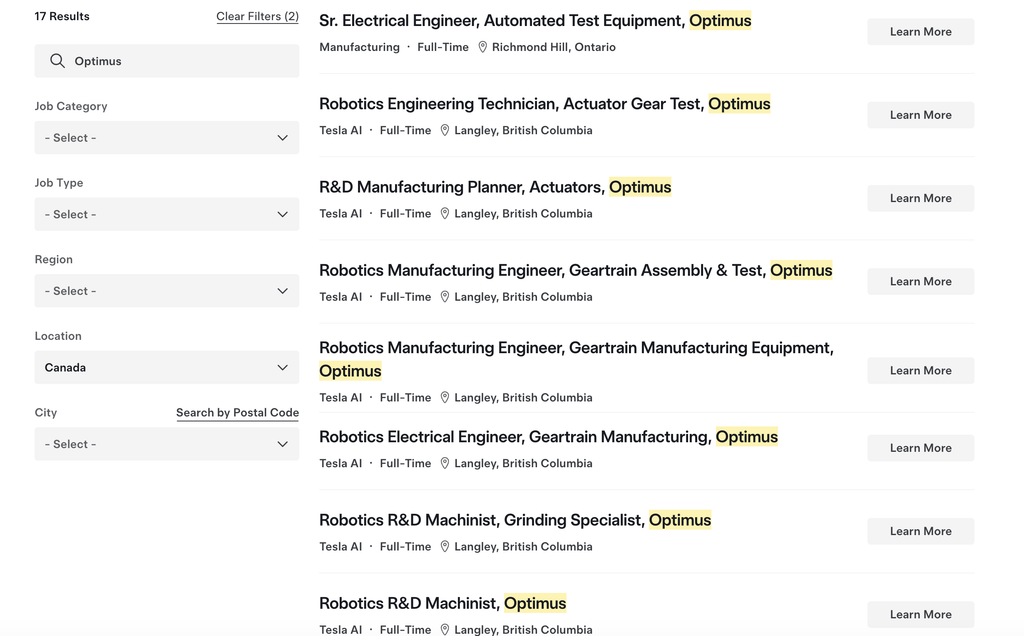
This is not a one-off posting. Tesla’s Langley operation now spans more than a dozen Optimus-related roles, from mechanical design and controls engineering to manufacturing equipment and line design. For a region best known for tech startups, film production, and port logistics, a humanoid robot manufacturing hub is a genuinely new kind of opportunity.
For parents in Metro Vancouver, the more interesting question is not just “what is Tesla building,” but “what does this mean for my kid’s future?” We dug into the education and career pathways that connect today’s classrooms to jobs like these, and found that the foundation for a career in robotics starts a lot earlier, and a lot more playfully, than most people assume.
What Tesla Is Actually Building in Langley
Optimus is Tesla’s humanoid robot project, and the company has said it wants the robot to eventually take on repetitive or physically demanding tasks in factories and, longer term, in other industries entirely. The Langley postings are concentrated around the actuator and geartrain systems that let the robot move, specifically the joints, gears, and motors that function like a human’s muscles and tendons.
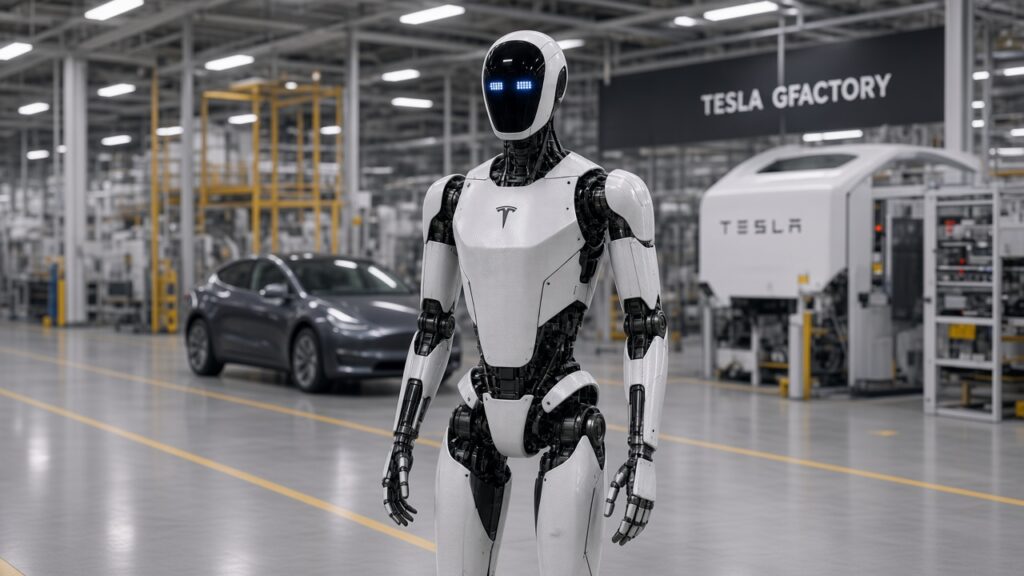
The actuator test technician role that started this story asks for hands-on testing and validation of the actuator components. Job descriptions for similar Optimus roles talk about developing test plans, building custom fixtures, and troubleshooting geartrain components used in “the highest-performance robotic actuation systems in the world.” Other Langley postings cover controls engineering, electrical engineering for geartrain manufacturing, and mechanical design for the motors themselves.
This matters locally for a few reasons:
- It signals that advanced robotics manufacturing, not just robotics research, is coming to BC
- The roles span a wide range of education levels, from technician and technologist positions to full engineering degrees
- Tesla has been expanding its Optimus hiring aggressively, and Langley has grown from a single Vancouver-area posting into a genuine cluster of roles
What These Roles Pay
Compensation varies significantly by role and experience level, but third-party salary estimates give a useful range for the kind of Optimus positions based in Langley:
- Robotics manufacturing and geartrain engineering roles in Langley are estimated in the $92,000 to $105,000 per year range
- Robotics CAE (computer-aided engineering) roles are estimated closer to $67,000 to $78,000 per year
- Comparable Actuator Test Engineer postings at Tesla’s US facilities list a broader $108,000 to $240,000 USD range depending on seniority
- Across Tesla more broadly, test engineers average roughly $140,000 per year in total compensation, with a reported range from about $35,000 up to $314,000 depending on level and location
The Education Pipeline: From UBC to the Factory Floor
If Tesla needs actuator engineers, geartrain specialists, and robotics technicians in Langley, where do those people come from? Part of the answer is close by.
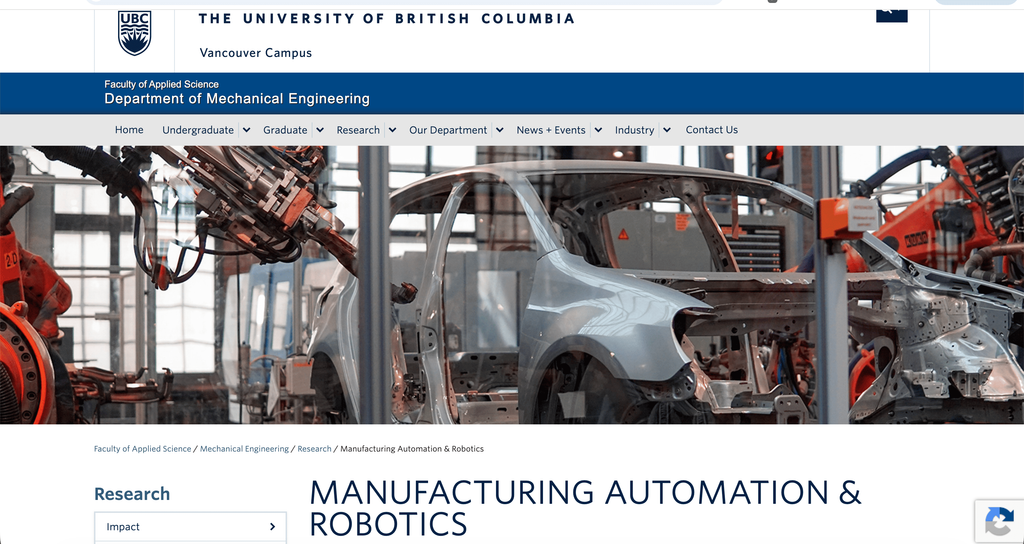
UBC’s Department of Mechanical Engineering runs a dedicated Manufacturing Automation and Robotics research area, where faculty work on machining and additive manufacturing processes, CAD/CAM systems, mobile robots and telerobotics, human-robot interaction, and what the department calls the “Mechatronic Design Quotient,” a framework for designing smart, sensor-driven mechanical systems. Several faculty members focus specifically on robotic manipulation, motion planning, and the control systems that let machines move precisely and reliably, which is exactly the skill set behind an actuator geartrain.
What a UBC Engineering Degree Costs
For families weighing the investment, UBC’s published 2025/26 tuition rates for Applied Science (the faculty that includes Mechanical Engineering) work out to approximately:
- Domestic students (Year 1): roughly $7,500 per year
- Domestic students (Years 2 to 5): roughly $8,000 per year
- International students: substantially higher, priced per credit and adjusted annually
A typical four-year domestic Mechanical Engineering degree at UBC therefore runs in the neighborhood of $30,000 to $32,000 in tuition alone over four years, before housing, books, and living costs in Vancouver, which UBC and third-party estimates put at roughly $1,600 to $2,700 per month.
For students who want a more direct, hands-on route without a full engineering degree, technologist diploma programs at BC institutions such as BCIT offer mechatronics and robotics-focused training, generally over one to two years, at a lower total cost than a four-year university degree, though exact pricing varies by program and should be confirmed directly with the institution.
UBC is not the only local option. BC’s post-secondary system offers several parallel pathways into this field:
- University programs: Mechanical engineering, mechatronics, and electrical engineering degrees at UBC, SFU, and University of Victoria, several with dedicated robotics or automation research groups
- Technologist diplomas: BCIT offers mechatronics and manufacturing technology programs that train the kind of hands-on technicians Tesla is hiring for its Actuator Test roles
- Apprenticeships: Skilled trades pathways in machining, industrial mechanics, and electrical work remain a direct route into advanced manufacturing, including robotics assembly and test lines
What is notable is how wide the entry points are. Not every Optimus-related job in Langley requires a graduate engineering degree. Several are technician roles that value hands-on mechanical aptitude, fabrication skills, and the ability to build and troubleshoot test equipment, alongside formal education.
Robotics Is No Longer a Niche Career Path
It is easy to think of humanoid robots as science fiction, but the job postings tell a more grounded story. Tesla’s hiring push for Optimus has grown from a single Canadian posting to dozens of open roles as the company moves toward larger-scale production, and it is one of several companies globally racing to build practical robots for manufacturing and, eventually, everyday tasks.
For today’s kids, this points toward a set of career paths that barely existed a decade ago:
Robotics and mechatronics engineering. Designing the mechanical and electrical systems that let machines sense, move, and respond, the exact skill set behind actuator and geartrain roles.
Controls and automation engineering. Writing the software and control logic that governs how a robot behaves, from a single joint to a full production line.
Manufacturing and test engineering. Building the processes, fixtures, and quality systems that turn a robot prototype into thousands of reliable units.
AI and computer vision. Teaching robots to perceive and interpret the world around them, an area of growing overlap between coding, data, and mechanical systems.
Skilled trades in advanced manufacturing. Machining, industrial electrical work, and precision assembly remain essential, and increasingly robotics-adjacent, careers that do not always require a four-year degree.
The common thread across nearly all of these paths is an early, comfortable relationship with both code and hands-on building. That is a combination that is hard to develop in a single high school elective, which is why it increasingly starts much earlier.
Where the Foundation Actually Gets Built
This is where a program like Code Ninjas fits into the picture, not as a robotics engineering course, but as an early, low-pressure introduction to the way of thinking that later becomes robotics, controls, and automation work.
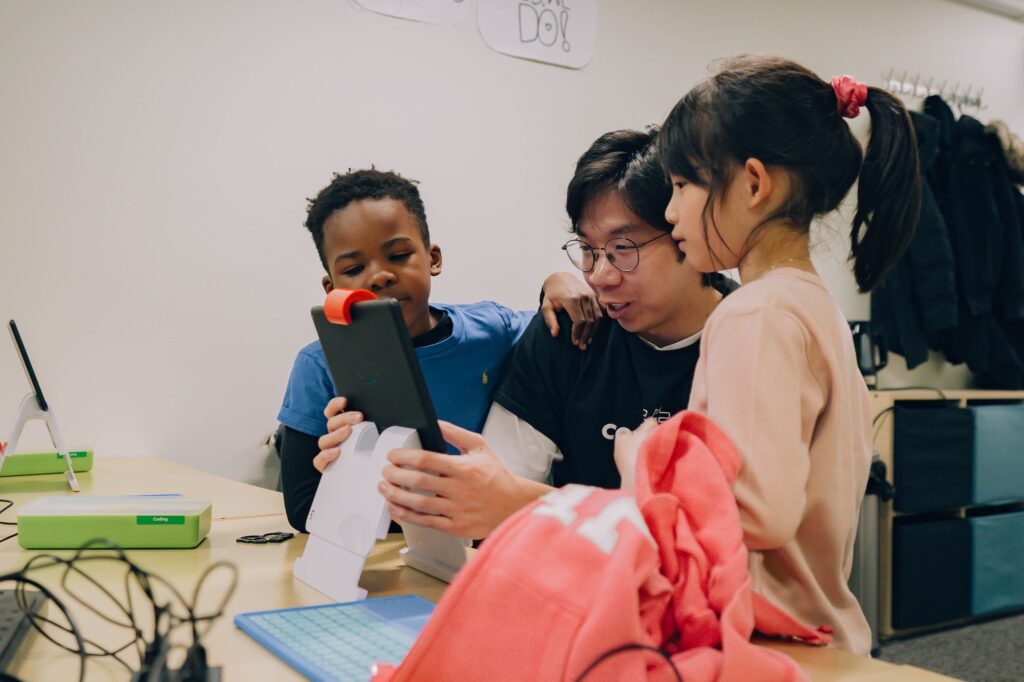
Code Ninjas runs a self-paced, game-based curriculum built around a nine-level belt system, similar in structure to martial arts. Kids progress from block-based coding for younger ninjas through JavaScript, and eventually into C# with Unity for older students, building and publishing their own games along the way. Robotics is woven directly into the curriculum alongside coding, so kids are not just learning to write instructions for a screen, they are learning the same core loop that shows up in an actuator test lab: build something, test it, watch it fail, figure out why, and try again.
That loop is exactly what shows up in the Tesla job postings. Engineers and technicians in Langley are asked to develop test plans, build fixtures, analyze failures, and iterate on designs. Those are not exotic skills invented for humanoid robots. They are the same problem-solving habits a curious eight-year-old builds one afternoon at a time, just applied later to gears instead of game characters.
For Metro Vancouver parents wondering whether coding classes are worth it if their child is not headed toward a typical software job, the Tesla Langley postings are a useful data point. The demand for people who can combine mechanical thinking, coding logic, and hands-on testing is growing quickly, and it now has a very real, very local address.
What It Costs to Get Started
Code Ninjas runs on a monthly membership model rather than a fixed course fee, so families can start small and scale up. At the Metro Vancouver-area Guildford location, for example, the CREATE program (ages 7-14) and JR program (ages 5-7) are both priced at $309 per month plus a one-time $50 registration fee, covering two hours of coding per week. Founding-family and multi-child sibling discounts are commonly available at individual locations, and most centres also offer week-long camps during spring, summer, and winter breaks as a lower-commitment way to try it out first.
Pricing varies by location and by how many sessions per week a child attends, so it is worth checking directly with your nearest Metro Vancouver Code Ninjas centre (Langley, Coquitlam, Burnaby, North Vancouver, and Vancouver all have locations) for current rates.
The Takeaway for Metro Vancouver Families
A humanoid robot manufacturing hub opening in Langley is a strong signal about where the regional economy is heading. It also reframes a common parenting question. Coding classes are not just about producing software developers. They are about building the underlying comfort with logic, iteration, and hands-on problem-solving that shows up across robotics, manufacturing, and engineering careers, including the kind Tesla is hiring for right now, a short drive from home.
Kids working through a coding and robotics curriculum today will not be building actuator gearboxes next year. But the habits they are forming, breaking a big problem into small testable steps, debugging patiently, and building something real with their own hands, are precisely the ones that will matter when they are ready to apply for a job like the one that started this story.
Have a Metro Vancouver STEM program, camp, or robotics resource we should feature? Let us know, we are always looking to connect local families with the programs shaping the region’s next generation of builders.
[THIS ARTICLE IS WRITTEN IN PARTNERSHIP WITH CODE NINJAS]