


- Why the Vancouver Art Gallery Is Worth Visiting
- The Historic Building Behind the Gallery
- Emily Carr and the Spirit of British Columbia
- Indigenous Art and Cultural Identity
- Vancouver’s Famous Photo-Conceptualism Movement
- The Art of Wellbeing: Why Museums Can Be Good for Your Mental Health
- Best Exhibitions at the Vancouver Art Gallery in 2026
- Vancouver Art Gallery Tickets (2026)
- Vancouver Art Gallery Hours
- Don’t Skip the 1931 Gallery Bistro
- Build a Downtown Vancouver Art Walk
- The Future of the Vancouver Art Gallery
- Final Thoughts
Did you know this was once Vancouver’s courthouse? 👀
— Active Vancouver (@ActiveYVR) May 28, 2026
The Vancouver Art Gallery was built between 1907 and 1911.
Designed by Francis Rattenbury — the architect behind Victoria’s Empress Hotel and BC Parliament Buildings. pic.twitter.com/da29vJ0TVz
Where art, wellness, architecture, and Vancouver culture come together
In a city known for mountain trails, seawall bike rides, rainforest hikes, and ocean adventures, it’s easy to think of an “active lifestyle” as something purely physical. But in Vancouver, wellness also means slowing down, reconnecting with creativity, and finding spaces that recharge the mind as much as the body.
That’s exactly where the Vancouver Art Gallery shines.
Located beside Robson Square in the heart of downtown Vancouver, the gallery is more than a museum. It’s one of the city’s most important cultural landmarks — a place where architecture, Indigenous history, modern art, mindfulness, and urban exploration intersect.
Whether you’re planning a rainy-day activity, a downtown walking route, a date idea, or a quiet solo escape, the Vancouver Art Gallery deserves a spot on your Vancouver bucket list.
Why the Vancouver Art Gallery Is Worth Visiting
The Vancouver Art Gallery (often called the VAG by locals) is the largest public art museum in Western Canada and houses more than 13,000 works of art spanning historical and contemporary periods.
But what makes the gallery special isn’t just the collection — it’s the way it reflects British Columbia itself.
Inside, you’ll find:
- Emily Carr’s iconic rainforest paintings
- Indigenous art from the Northwest Coast
- Contemporary installations exploring climate change
- Experimental photography from Vancouver’s world-famous photo-conceptualist movement
- Immersive exhibits designed around wellness and mindfulness
For visitors exploring downtown Vancouver on foot or by bike, the gallery also works perfectly as part of a larger cultural itinerary.
The Historic Building Behind the Gallery
From Courthouse to Cultural Landmark
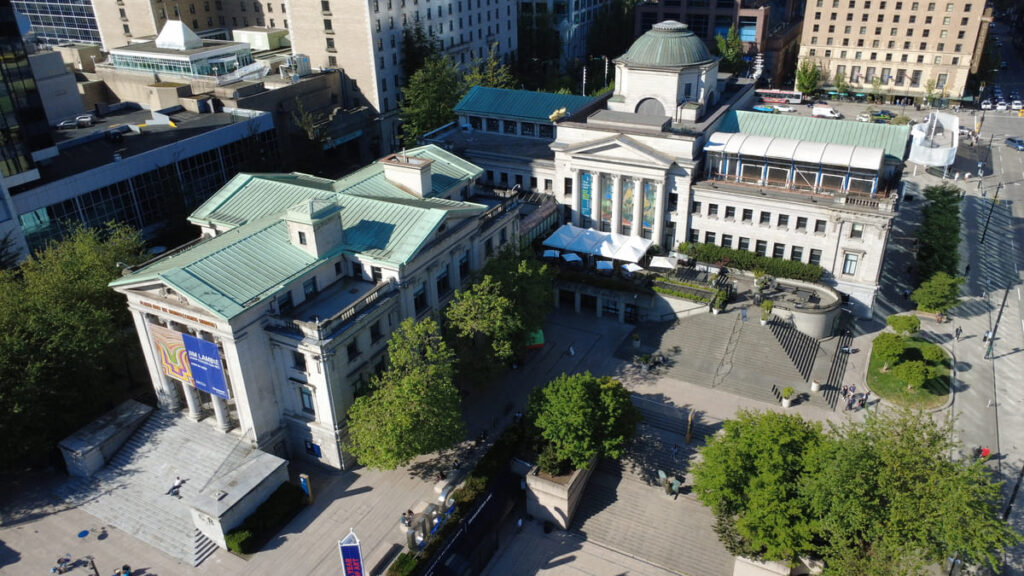
The building that now houses the Vancouver Art Gallery originally opened between 1907 and 1911 as the provincial courthouse.
Designed by famed architect Sir Francis Rattenbury — who also designed the Empress Hotel and the BC Legislature in Victoria — the structure was built in a grand Neoclassical style meant to symbolize authority and permanence.
Look closely and you’ll notice:
- Massive Ionic columns
- Stone facades made from BC materials
- Symmetrical architecture
- The famous copper dome
- Granite lions guarding the entrance
For decades, this building represented government power and the judicial system.
That changed in the late 1970s.
When the courts relocated, Vancouver transformed the former courthouse into a public cultural space. Legendary Canadian architect Arthur Erickson redesigned the interior and integrated it into the larger Robson Square complex.
The result was one of Vancouver’s most successful urban transformations.
Today, the building feels open, walkable, and welcoming — connected to plazas, stairs, patios, waterfalls, and public gathering spaces that blend naturally into downtown life.
Emily Carr and the Spirit of British Columbia
No artist is more closely connected to the Vancouver Art Gallery than Emily Carr.
The gallery houses the world’s most important collection of her work, including paintings inspired by BC’s coastal forests and Indigenous villages.
Her paintings are deeply tied to the landscapes many Vancouverites explore every weekend — towering cedar forests, misty coastlines, and old-growth wilderness.
Some of her most famous works include:
- Big Raven
- Red Cedar
- Scorned as Timber, Beloved of the Sky
These works feel especially meaningful for hikers, campers, trail runners, and anyone who loves British Columbia’s outdoors.
A More Modern Perspective
Recent exhibitions have also introduced more critical conversations around Carr’s work and colonial history.
The 2026 exhibition That Green Ideal: Emily Carr and the Idea of Nature explores not only Carr’s artistic brilliance, but also the ways Indigenous cultures were historically represented through settler perspectives.
This creates a more thoughtful and nuanced gallery experience — one that encourages visitors to think more deeply about land, identity, and history.
Indigenous Art and Cultural Identity
The Vancouver Art Gallery stands on the unceded territories of the Musqueam, Squamish, and Tsleil-Waututh Nations.
The gallery’s Indigenous collections include:
- Masks
- Totem poles
- Feast dishes
- Carvings
- Contemporary multimedia works
Visitors can experience art from many Northwest Coast Nations, including:
- Haida
- Heiltsuk
- Kwakwaka’wakw
- Nisga’a
- Nuu-chah-nulth
- Tlingit
The gallery also features modern Indigenous artists such as:
- Bill Reid
- Robert Davidson
- Dana Claxton
- Brian Jungen
These works often explore themes of identity, colonialism, technology, environmental stewardship, and cultural continuity.
Vancouver’s Famous Photo-Conceptualism Movement
One of the gallery’s most internationally influential strengths is its connection to the “Vancouver School” of photo-conceptualism.
Artists like:
- Jeff Wall
- Stan Douglas
- Ian Wallace
- Rodney Graham
helped redefine contemporary photography worldwide.
Their work often focuses on:
- Urban development
- Social tensions
- Media culture
- Vancouver’s changing identity
- The relationship between reality and staged imagery
Even if you’re not a “museum person,” these large-scale visual works are often surprisingly engaging and cinematic.
The Art of Wellbeing: Why Museums Can Be Good for Your Mental Health
One of the most interesting developments at the Vancouver Art Gallery is its focus on wellness and mindfulness.
Through its “Art of Wellbeing” initiatives, the gallery explores how art can support:
- Stress reduction
- Mental recovery
- Emotional wellbeing
- Community connection
- Mindful observation
For active people, this creates an important balance.
After intense workouts, busy work schedules, or nonstop digital stimulation, quiet time spent viewing art can feel surprisingly restorative.
The gallery essentially becomes a form of “active recovery” for the mind.
And honestly, on Vancouver’s rainy winter days, it’s one of the best indoor activities in the city.
Best Exhibitions at the Vancouver Art Gallery in 2026
SANCTUARY: The Ancient Forest Experience
One of the most immersive exhibitions this year is SANCTUARY.
Visitors enter a dark geodesic dome and look upward into a simulated old-growth forest canopy.
The experience recreates the feeling of standing beneath ancient BC rainforest trees and highlights the importance of protecting endangered ecosystems.
Perfect for:
- Nature lovers
- Hikers
- Photographers
- Conservationists
- Families
Future Geographies: Art in the Century of Climate Change
This exhibition explores climate change through contemporary art installations.
One standout piece uses charcoal to examine themes of:
- Carbon cycles
- Environmental destruction
- Landscape transformation
- Humanity’s relationship with nature
The exhibition feels especially relevant in British Columbia, where conversations around wildfire seasons, forestry, and sustainability are increasingly important.
Vancouver Art Gallery Tickets (2026)
Here’s the current admission structure for 2026:
| Ticket Type | Price |
|---|---|
| Adult General Admission | $35 |
| BC Resident Adult | $29 |
| Youth (13–18) | Free |
| Children 12 & Under | Free |
| Indigenous Peoples | Free |
| Members | Free |
Free First Fridays
One of the best deals in Vancouver is the gallery’s BMO Free First Fridays program.
On the first Friday of every month from 4 PM to 8 PM:
- Admission is completely free
- Timed online reservations are recommended
- Spots fill up quickly
If you’re budget-conscious, this is the ideal time to visit.
Vancouver Art Gallery Hours
Typical operating hours:
- Monday, Wednesday, Thursday, Saturday, Sunday: 10 AM – 5 PM
- Friday: 10 AM – 8 PM
- Tuesday: Closed
During summer, the gallery often operates seven days a week.
Don’t Skip the 1931 Gallery Bistro
After exploring the exhibits, head upstairs to the 1931 Gallery Bistro.
The bistro overlooks Robson Square and offers:
- West Coast-inspired dishes
- Local ingredients
- Outdoor patio seating
- Craft beer
- Brunch and lunch options
It’s a surprisingly nice stop even if you’re not spending the entire day at the gallery.
Build a Downtown Vancouver Art Walk
The Vancouver Art Gallery pairs perfectly with several nearby attractions.
Nearby Cultural Stops
Bill Reid Gallery
A short walk away and focused on Northwest Coast Indigenous art and jewelry.
Contemporary Art Gallery
Always free admission and known for experimental contemporary exhibitions.
Vancouver Maritime Museum
Great addition to a False Creek cycling route or Vanier Park day trip.
The Future of the Vancouver Art Gallery
The gallery is currently planning a major new home at Larwill Park near Georgia Street.
After previous architectural plans became too expensive, a new Canadian-led design team is now developing a more sustainable vision centered around:
- Mass timber construction
- Lower carbon emissions
- Indigenous-inspired architectural ideas
- Expanded exhibition space
- Community-focused public areas
The future building aims to become one of Canada’s most important cultural spaces.
Final Thoughts
The Vancouver Art Gallery is one of those places that reveals different sides of Vancouver all at once.
It connects:
- Nature and urban life
- History and modernity
- Wellness and creativity
- Indigenous culture and contemporary identity
- Rainy-day exploration and active city living
Whether you spend an hour wandering through exhibitions or build an entire downtown culture day around it, the gallery offers a slower, more thoughtful way to experience Vancouver.
And in a city obsessed with movement and outdoor adventure, that balance might be exactly what makes it special.