


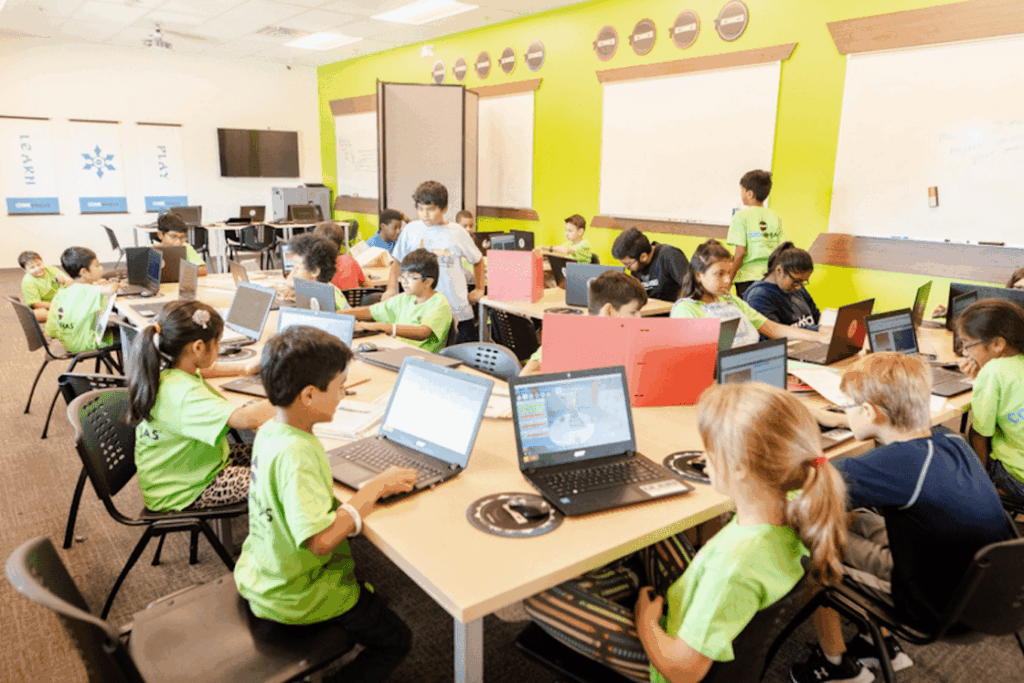
- A Metro Vancouver Parent’s Guide to Confidence, Logic, and Learning
- 1. Pattern Recognition (The Heart of Early Math)
- 2. Logic and “If–Then” Thinking
- 3. Sequencing and Spatial Awareness
- ✔️ A Belt System, Not Grades
- ✔️ Programs for Different Ages and Learning Styles
- ✔️ Supportive Mentorship from Code Senseis
A Metro Vancouver Parent’s Guide to Confidence, Logic, and Learning
Sponsored by Code Ninjas
January and February can feel like a reality check for many Metro Vancouver families.
The holiday glow has faded, rain clouds are back, and mid-year learning updates or report cards arrive—often bringing more questions than answers. If your child’s math proficiency has shifted from “Proficient” in December to “Developing” in February, you’re not alone in wondering what changed, and what you can do next.
At ActiveVancouver.ca, we believe learning is deeply connected to social wellness, confidence, and community. That’s why we’re exploring a powerful (and often overlooked) tool that helps kids strengthen math skills in a way that feels more like play than pressure: coding.
With insights from British Columbia’s proficiency-based curriculum and programs like Code Ninjas, this article breaks down why coding supports math learning—and how Vancouver families can use it as a smart mid-year pivot.
Understanding BC’s New Report Cards (and Why Math Can Feel Tricky Mid-Year)
British Columbia’s proficiency-based reporting system—now fully implemented for Kindergarten through Grade 9—was designed to show learning as a process, not a fixed score.
Instead of letter grades, students are assessed on a four-point scale:
- Emerging
- Developing
- Proficient
- Extending
What many parents don’t realize is that these levels are topic-specific. A child might be Proficient in patterning in Term 1, then move to Developing when the class shifts to geometry or measurement later in the year.
This isn’t regression—it’s adjustment.
Still, math can be especially stressful. Research shows that math anxiety can interfere with working memory and problem-solving, making it harder for kids to show what they know. That’s where coding enters the picture.
Why Coding and Math Work So Well Together
Coding isn’t just about computers—it’s about thinking. When kids code, they practice the same foundational skills the BC math curriculum emphasizes:
1. Pattern Recognition (The Heart of Early Math)
In math class, kids learn to spot repeating or growing patterns.
In coding, they use loops to repeat actions.
Instead of writing “3 + 3 + 3 + 3,” a child might program:
Repeat 4 times → move forward 3 steps
Suddenly, multiplication isn’t abstract—it’s visible, interactive, and logical.
2. Logic and “If–Then” Thinking
Math requires students to explain why something works. Coding does the same.
When kids use if–else statements—
If the character touches the wall, stop. Otherwise, keep moving—
they’re practicing conditional reasoning, a key skill in algebra and geometry. When the code doesn’t work, they debug it, learning that mistakes are part of the process, not something to fear.
3. Sequencing and Spatial Awareness
Whether moving a robot or animating a character, coding is spatial by nature.
Kids learn:
- Left vs. right
- Up vs. down
- X and Y coordinates
- Distance and direction
These skills directly support BC’s math competencies around geometry, measurement, and number sense—and research shows spatial thinking is a strong predictor of future math success.
Why Coding Builds Confidence (Especially for Kids Who Struggle with Math)
One of the biggest strengths of coding is that it’s low-stakes.
There’s no red pen. No test clock. Just experimentation.
In coding environments, being “Developing” isn’t a label—it’s part of debugging. Kids learn:
- Problems can be solved
- Effort leads to improvement
- Struggle is temporary
This mindset shift is incredibly powerful for children who feel stuck or discouraged in math class.
How Code Ninjas Supports Vancouver Families Mid-Year
Sponsored Highlight
Code Ninjas has become a familiar name across Metro Vancouver, with local Dojos from Vancouver proper to the North Shore, Burnaby, Richmond, Surrey, and beyond.
What makes the program stand out for families navigating mid-year learning updates?
✔️ A Belt System, Not Grades
Inspired by martial arts, Code Ninjas uses a belt-based progression. Kids move forward by mastering skills—not by keeping pace with others.
This mirrors BC’s proficiency model and helps kids focus on growth instead of comparison.
✔️ Programs for Different Ages and Learning Styles
- Code Ninjas JR (Ages 5–7):
Visual, block-based coding that builds sequencing and pattern skills. - Code Ninjas CREATE (Ages 8–14):
Game development using JavaScript and C#, reinforcing algebra, variables, and coordinate geometry. - Ninja Circuits & Academies:
Hands-on electronics, robotics, and even AI—connecting math to real-world problem solving.
✔️ Supportive Mentorship from Code Senseis
Code Senseis don’t give answers—they guide kids through frustration, helping them develop perseverance and reasoning. These are exactly the skills BC’s curriculum highlights as essential for the future.
Coding Fits Perfectly into ActiveVancouver’s Wellness Philosophy
At first glance, coding might seem like the opposite of outdoor play—but in Vancouver’s rainy season, balance matters.
Coding can be:
- A productive rainy-day activity
- A social experience, not isolated screen time
- A creative outlet that complements sports, nature, and movement
Programs like Parent’s Night Out at Code Ninjas also support family wellness, giving parents time to recharge while kids learn and connect.
How Parents Can Reinforce Math Through Coding at Home
You don’t need to be a programmer to help.
Here are simple ways to connect coding and math at home:
- Talk About Variables:
Ask your child how “score” or “health” changes in their game. - Explore Coordinates:
Have them explain how characters move on the screen. - Try Unplugged Coding:
Write step-by-step instructions for everyday tasks (like making a sandwich) and spot the “bugs.”
These conversations turn report card feedback into real-world learning moments.
Looking Ahead: Future-Ready Skills for Vancouver Kids
As we move deeper into 2026, coding is becoming a core literacy—right alongside reading and math.
With AI, robotics, and adaptive learning shaping education, kids who understand logic, patterns, and problem-solving will be better prepared for whatever path they choose.
More importantly, they’ll believe they can learn hard things.
Final Thoughts: Turning Mid-Year Worry into Opportunity
Mid-year report cards aren’t verdicts—they’re signposts.
If math feels challenging right now, coding offers a positive, confidence-building way forward. Programs like Code Ninjas give Vancouver kids the space to experiment, persist, and succeed—while aligning beautifully with BC’s curriculum and ActiveVancouver’s vision of social wellness.
From first loops to earned belts, coding helps kids see math not as something to fear—but as something they can master.
And that’s a lesson worth building.
This article is sponsored by Code Ninjas, proudly supporting families across Metro Vancouver in building confident, future-ready learners.