



- I. Introduction: Why STEM/STEAM Matters Now More Than Ever
- II. Hands-On Innovation: Maker Academies & Enrichment Centers
- Steamoji: Cultivating Innovators with "Build to Solve™"
- Sparks Academy: Year-Round Engagement for Young Minds
- EngKidz: Engineer-Designed, Hands-On Learning with Take-Home Kits
- STEMA Learning Centre: Comprehensive After-School & Holiday Programs
- Engineering For Kids® of Vancouver: Broadening Horizons for Ages 4-14
- Table 2: Parent Perspectives: What Makes These Programs Stand Out
- III. Dedicated Pathways: STEM-Focused Schools
- IV. Immersive Experiences: Summer Camps & Short Programs
- V. Choosing the Right Fit: Key Considerations for Parents
- VI. Conclusion: Empowering the Next Generation of Innovators
The contemporary educational landscape is undergoing a profound transformation, driven by rapid technological advancements and an increasingly complex global environment. In this context, STEM (Science, Technology, Engineering, Mathematics) and STEAM (which integrates Art into these disciplines) education has transcended its traditional role, becoming a foundational literacy essential for children to navigate and shape their future.
I. Introduction: Why STEM/STEAM Matters Now More Than Ever
Many parents and educators recognize that conventional schooling often overlooks practical STEAM and critical thinking skills, creating a significant gap that specialized programs are strategically designed to fill.
The urgency of this educational shift is underscored by the looming societal changes, particularly the upheaval being caused by artificial intelligence (AI) and automation. Preparing children for these future challenges is not merely about securing employment; it is about cultivating adaptive, resilient, and creative individuals capable of thriving in an unpredictable world. The consistent emphasis on “future-facing skills” across various program descriptions and parental feedback highlights a deep-seated concern among families and educators regarding the perceived limitations of traditional education in preparing children for a technology-driven future. This collective focus on equipping children with skills for an evolving world reflects a societal imperative to “future-proof” the next generation, moving beyond conventional academic benchmarks towards fostering adaptability, resilience, and innovative thinking as paramount competencies. Programs that clearly articulate how they prepare children for these specific future challenges, rather than simply listing subjects, resonate profoundly with parental aspirations and anxieties.
Vancouver, British Columbia, stands as a dynamic and progressive environment at the forefront of this educational evolution. The city and its surrounding areas have become a vibrant hub for innovative STEM/STEAM learning, offering a rich and diverse ecosystem of educational opportunities. From specialized academies and enrichment centers to immersive camps, the proliferation of these programs, coupled with overwhelmingly positive feedback from parents and students, attests to the strong demand for high-quality, future-focused education within the region.
II. Hands-On Innovation: Maker Academies & Enrichment Centers
This section delves into various local centers that provide a practical, hands-on approach to STEM/STEAM education, highlighting their unique methodologies and the tangible benefits reported by families.
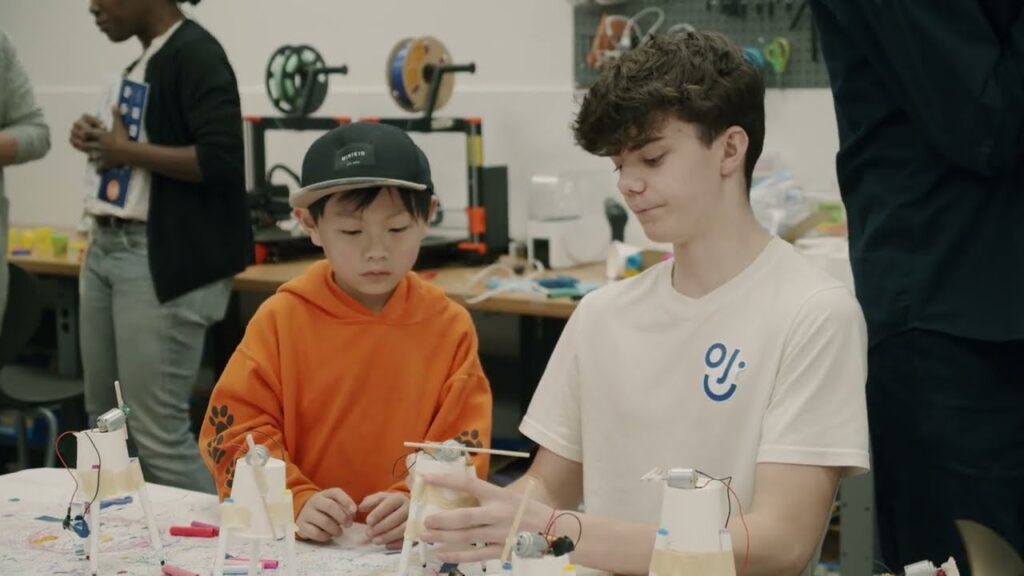
Steamoji: Cultivating Innovators with “Build to Solve™”
https://www.steamoji.com/canada-bc-kerrisdale/
Steamoji, with prominent locations in Kerrisdale and Kitsilano, positions itself as “The Maker Academy for Kids” dedicated to “training the next generation of innovators”. It caters to a broad age range of children, typically from 5 to 14 years old.
At the heart of Steamoji’s offer is a comprehensive 400-hour “Build to Solve™” curriculum, meticulously designed to provide structured and reinforcing learning over a 5-year period. This extensive program ensures deep engagement and progressive skill development, introducing students to diverse skill pathways including 3D printing, laser cutting, robotics, coding, engineering, digital arts, fabrication, physical computing, and applied design. The methodology heavily emphasizes hands-on, project-based learning, where students are taught foundational skills and then encouraged to practically apply them to “imagine, create and improve their own solutions”. Gregg Sayer, the owner of Steamoji Kerrisdale, passionately articulates this philosophy, stating, “I love to see children creating a video game rather than playing on their computer or building a remote-controlled car rather than buying it at the store”.
Beyond technical skills, Steamoji explicitly aims to cultivate a “confident, can-do mindset” by exposing children to new technologies and encouraging them to “always try, adapt and try again”. This focus extends to teaching perseverance through failure, a critical life skill in a rapidly changing world.
The overwhelming positive sentiment in parent and student testimonials frequently extends beyond mere skill acquisition. Phrases such as “doesn’t mind sitting there 3 hours”, “super fun and unique workspace”, “happy and calm”, and “love going” point to a profound level of emotional engagement and enjoyment. This deep connection is a direct outcome of the hands-on, project-based, and interactive learning methodologies. When children are actively building, experimenting, and solving problems, they are intrinsically motivated, leading to sustained interest and genuine, deeper learning.
The consistently praised positive interactions with staff further reinforce this, creating a supportive and encouraging environment where “it’s okay to make mistakes”, which is crucial for fostering a growth mindset. For parents, the emotional well-being and sustained engagement of their child within a learning environment are as critical as the specific technical skills acquired. Programs that prioritize a positive, supportive, and fun learning atmosphere, coupled with effective pedagogy, tend to see higher retention rates, deeper learning outcomes, and more enthusiastic participation from students.
Parents consistently praise the engaging environment and the quality of the staff. Ruth Liu highlighted learning “a lot about 3D printing, laser cutting, coding, and so much more!”. M M noted their child’s sustained engagement, stating they “doesn’t mind sitting there 3 hours in a row working on multiple projects”. Nina Laier described it as a “wonderful place for the kids to come and explore, learn and have fun”. The staff, including Gregg “Gmoji” Sayer, Laura, Louise, Adam, and Ellie, are frequently lauded as “awesome,” “kind,” “welcoming,” “knowledgeable,” “friendly,” “helpful,” and having “a great way with kids”. A powerful student testimonial comes from 9-year-old Lucy, who called Steamoji a “super fun and unique workspace” where she feels “so happy and calm,” and praised Gregg’s encouragement and the staff’s helpfulness. Logistically, Steamoji Kerrisdale offers flexible scheduling, operating seven days a week, with sessions easily booked through a convenient app.
Free trial sessions are also available for prospective families.
Steamoji Kerrisdale (located at 5465 West Blvd) is a STEM makers academy offering STEM / STEAM programs and camps for kids in Vancouver, from kid-friendly robotics to advanced competitive robotics programs like VEX robotics. Steamoji’s hands-on curriculum is highly rated by parents and features kids coding classes, 3D printing classes for kids, and engineering programs for kids and robotics for kids in Vancouver.
Sparks Academy: Year-Round Engagement for Young Minds
Situated in Kerrisdale, Vancouver, Sparks Academy distinguishes itself by providing comprehensive year-round Science, Math, Coding, and Technology lessons for children spanning a wide age range, from 3 to 15 years old. Their educational philosophy integrates STEAM education, drawing inspiration from the Reggio Emilia approach to ignite students’ inherent innovation and imagination. This child-centered, experiential approach fosters creativity and critical thinking from a young age. Programs are diverse, including Robotic & Coding (for 6-15 year olds), Creative Engineering (6-15), Science (6-15), Math (6-15), and specialized Competition classes (suitable for all age groups) focusing on platforms like WLRC, VEX IQ, and First Lego League.
Sparks Academy’s extensive age range (3-15) and commitment to year-round offerings signify a strong belief in the cumulative benefits of early and consistent exposure to STEM/STEAM concepts. Starting as young as three years old allows for the cultivation of foundational curiosity, problem-solving instincts, and an intuitive understanding of scientific principles before children might encounter more rigid academic structures. The continuous, year-round nature of the programs provides consistent reinforcement, which is crucial for deep learning and preventing the knowledge decay that can occur with intermittent or short-term programs like summer camps alone. This model caters to parents who seek a long-term, sustained enrichment pathway for their children, aiming to build a deeply ingrained love for learning and a strong foundation in critical future skills, rather than just episodic skill acquisition. It suggests a growing recognition of the importance of continuity in early childhood and adolescent STEM education.
EngKidz: Engineer-Designed, Hands-On Learning with Take-Home Kits
EngKidz offers engaging in-person STEM classes specifically designed for children in Vancouver and throughout British Columbia, with a core mission to inspire creativity and foster a robust “maker spirit” in every child. All EngKidz programs are characterized by a highly hands-on approach, placing significant emphasis on the engineering design process. This ensures children learn not just facts, but how to think like engineers. A key differentiator is that their courses are meticulously designed by professional Engineers, ensuring a strong, practical foundation in STEM principles and a direct alignment with BC’s ADST (Applied Design, Skills and Technologies) curriculum. A standout feature that extends learning beyond the classroom is the custom-designed take-home STEM kit provided with every camp and class. These kits contain all necessary materials for continued exploration and engagement at home. Their program list includes core STEM areas such as Science and Engineering, Robotics, Coding, 3D Design, and 3D Printing.
EngKidz’s explicit alignment with “BC’s ADST curriculum” and the fact that their courses are “designed by Engineers” points to a strategic effort to bridge the gap between formal school education and practical, real-world application. This ensures that the extracurricular learning is not isolated but complements and enhances what children learn in school, providing a tangible context for theoretical knowledge. The provision of “take-home STEM kits” further extends this bridge, allowing children to continue experimenting and reinforcing concepts in their own environment, addressing the limitations of classroom time and resources. This approach is highly appealing to parents who seek programs that not only entertain and educate but also provide direct, measurable support for their child’s academic journey, ensuring that skills learned are relevant and applicable to their broader educational and future career pathways. It signifies a growing demand for programs that offer practical, curriculum-aligned enrichment. Parents consistently praise the instructors for being “superb” at keeping kids engaged, “warm and welcoming,” “patient,” “energetic,” and “great with communicating with children.” They are noted for their ability to break down complex engineering principles into simpler, understandable analogies.
STEMA Learning Centre: Comprehensive After-School & Holiday Programs
Located conveniently in East Vancouver, STEMA Learning Centre offers a robust suite of after-school STEAM programs and engaging holiday camps, alongside crucial academic support services. Their program structure is designed to cater to different age groups. The STEAM Explorer program (Ages 5-7) introduces young children to technology and creativity through accessible block and icon-based coding, enabling them to create simple games and animations. It also delves into 3D design, allowing them to craft digital models, and explores the basics of robotics and engineering through building and programming simple robots. This foundational program focuses on enhancing problem-solving skills and fostering a deep understanding of how things work in the world around them.
The STEAM Genius program (Ages 7-15), an advanced offering, provides hands-on learning in both block-based coding (using Scratch) and more advanced text-based coding languages like Python, CSS, and JavaScript. Students engage in creating games, exploring Minecraft coding and Roblox Studio, and delve into intermediate robotics. Notably, this program also introduces students to emerging technologies such as Artificial Intelligence (AI) and Virtual Reality (VR), equipping them with essential future-facing skills. Beyond STEAM, STEMA also provides targeted Math & Reading tutoring to boost students’ confidence and skills. This includes focused math sessions on key concepts and reading tutoring to enhance comprehension and vocabulary. They further offer general academic support, including homework help and test preparation. These immersive STEAM holiday camps provide an exciting, hands-on experience where children explore science, technology, engineering, art, and math through interactive projects and creative challenges, covering coding, robotics, 3D design, and digital arts. The camps are designed to develop problem-solving skills and teamwork in a supportive and engaging environment, providing a perfect opportunity for children to learn, create, and have fun.
A significant convenience for busy parents, STEMA Learning Centre offers a complimentary pickup service for students from nearby elementary schools. This ensures a safe and seamless transition from school to their STEAM programs, providing peace of mind for families. STEMA’s integrated approach, combining dedicated STEAM programs with traditional academic support in Math and Reading, as well as general homework help, indicates a comprehensive understanding of a child’s educational needs. This suggests a recognition that strong foundational literacy and numeracy are not separate from, but rather essential enablers for, success in advanced STEM fields. Furthermore, the provision of a complimentary pickup service directly addresses a major logistical challenge for many working parents, making these valuable programs significantly more accessible and convenient. This holistic model positions STEMA as a one-stop solution for parents seeking to support their child’s overall academic development while simultaneously preparing them for the demands of a technological future. The convenience factor, particularly the pickup service, acts as a strong competitive differentiator in the after-school enrichment market, demonstrating responsiveness to family practicalities.
Engineering For Kids® of Vancouver: Broadening Horizons for Ages 4-14
Engineering For Kids® of Vancouver offers a diverse array of STEM programs specifically designed for children aged 4 to 14, with the overarching goal of expanding their horizons through exciting and educational experiences. Their comprehensive curriculum spans a broad range of engineering and technology fields, including Robotics, Interactive Engineering, Technology & Coding, Aerospace Engineering, Mechanical Engineering, Website Design, and App Development. The programs are delivered in various flexible formats, including regular classes, immersive camps, specialized clubs, weekend workshops, and even unique events like birthday parties and Canadian Scouts events.
Engineering For Kids® of Vancouver emphasizes a highly fun, hands-on approach to learning. Their activities are meticulously designed to simultaneously engage and challenge children, effectively stimulating their brains and piquing their natural curiosity. The educators are described as well-qualified and deeply passionate about children’s education, a quality that is clearly reflected in the quality and impact of their classes and activities. A unique and highly valuable aspect is their ability to bring their interactive and engaging activities directly to various locations where young learners are present, such as local classrooms, parks, or community centers. This significantly increases accessibility. Beyond specific technical skills, the programs are designed to empower children with the fundamental abilities to “ask questions, identify problems, and find solutions in all areas of life,” highlighting the broader applicability of STEM thinking. The unique capability of Engineering For Kids to deliver their programs to various community locations represents a significant shift towards decentralized learning. This model effectively removes geographical barriers and integrates specialized STEM education directly into existing community structures. By doing so, it makes these programs more accessible to a wider demographic of children who might otherwise face logistical challenges in attending a dedicated learning center. This community-embedded educational model could represent a growing trend, particularly for younger age groups. It not only reduces logistical burdens for parents but also leverages existing community infrastructure, potentially fostering broader engagement with STEM education within neighborhoods and local schools.
Table 2: Parent Perspectives: What Makes These Programs Stand Out
| Program Name | Key Benefit Highlighted by Parents | Representative Quote/Summary |
| Steamoji Kerrisdale | High Engagement & Fun | “My kid likes it and doesn’t mind sitting there 3 hours in a row working on multiple projects.” / “Steamoji is a super fun and unique workspace. I’ve never been anywhere where I feel so happy and calm.” |
| Comprehensive Skill Development | “I learned a lot about 3D printing, laser cutting, coding, and so much more!” / “My son really enjoyed being here, you gain experience, skills and creativity.” | |
| Supportive & Knowledgeable Staff | “The facilitators are awesome and my kids just love going.” / “Adam and his team make every visit such a positive, supportive, and encouraging experience.” | |
| EngKidz | Effective Instruction & Engagement | “Instructors were warm and welcoming towards the children and were able to break down engineering principles into simpler analogies for the kids.” / “My science minded boy really enjoyed the classes. Will definitely participate in more future classes.” |
| Fostering Creativity & Engineering Skills | “A brilliant idea and wonderful classes. A creative way to encourage imagination and engineering skills.” | |
| STEMA Learning Centre | Holistic Support & Convenience | “Complimentary pickup service… parents can have peace of mind knowing their children are safely transported to our center, ready to dive into their learning adventures.” |
| Future-Ready Skills | “Students are introduced to AI, VR, and other emerging technologies, equipping them with essential skills for the future.” | |
| Engineering For Kids® of Vancouver | Hands-On & Engaging | “fun, hands-on activities that simultaneous engage and challenge them.” / “Our son came home every day from camp with an exciting story about what they had worked on that day.” |
| Problem-Solving Focus | “These skills will help them ask questions, identify problems, and find solutions in all areas of life.” |
III. Dedicated Pathways: STEM-Focused Schools
This section explores educational institutions that offer a comprehensive, integrated STEM curriculum as their primary focus, providing a more immersive and long-term learning environment.
Vancouver Independent School for Science and Technology (VISST): Vancouver’s Pioneer STEM High School
VISST stands as a groundbreaking institution, proudly identified as “Vancouver’s first and only dedicated STEM high school”. Established in 2022, it offers an accelerated and enriched curriculum primarily for high school students, admitting students from Grades 8 through 12. VISST’s curriculum is designed to accelerate “beyond the pace of the provincial one”, with all teachers being highly qualified “subject-matter experts”. This ensures a deep and challenging academic experience in both sciences and humanities. Learning is fundamentally “project-based” and centers on “real-world projects”, moving beyond traditional homework and exams. Computer science is a core component, taught comprehensively starting from Grade 8. The school champions individualized learning, facilitated by small class sizes, allowing for personalized attention and tailored educational paths.
A cornerstone of VISST’s philosophy is deep student involvement and agency. Students are actively encouraged to have “input into decisions at school meetings” and are even “involved in planning and decision-making,” including the crucial process of “which teachers to hire”. This democratic approach fosters profound “student buy-in and ownership”. This radical commitment to involving students in significant decision-making processes represents a profound shift from conventional top-down educational models. This level of student agency is not merely a democratic gesture; it is a pedagogical strategy designed to dramatically increase student investment. When students have a voice in shaping their learning environment, they become more invested, leading directly to a more engaged, motivated, and ultimately more effective learning experience where they are genuinely “excited to learn”. This active participation also implicitly teaches invaluable soft skills such as leadership, critical evaluation, negotiation, and collaborative problem-solving – skills that are highly relevant for future innovators and leaders. This model suggests a potential future direction for education where students are increasingly viewed as active co-creators of their learning journey, rather than passive recipients of instruction. This could lead to significantly higher student satisfaction, greater intrinsic motivation, and more personalized and relevant educational pathways, particularly for students who may be “bored in traditional schooling”.
The school cultivates a supportive and cooperative environment where “fun is deeply woven into the programming”, ensuring students are “excited to learn”. Staff are described as “open and transparent with students, and avoid reinforcing power dynamics,” viewing teachers and students as “all just people, on a journey of self-improvement together”. VISST explicitly aims to prepare students comprehensively for university, ensuring they enter higher education “prepared, organized, and confident”. Logistically, classes begin at a later time, 10:00 am, allowing students to come to school refreshed. Furthermore, VISST offers a “flexible tuition model that accounts for each family’s financial situation and resources”, striving for inclusivity. While its primary focus is high school, VISST also extends its reach with a “Grade 5-7 Math Club” and “Spring/summer camps”, indicating broader engagement with younger students.
West Vancouver Secondary School: Public School STEM Offerings
West Vancouver Secondary School, a prominent public institution in West Vancouver, integrates various programs into its curriculum, including notable STEM-related offerings. The school features a dedicated Robotics program, along with Applied Skills Programs in Wood Working and Carpentry, and a “Train in Trades” initiative. It is also recognized as an IB World School, offering the rigorous International Baccalaureate program. The school’s mission statement emphasizes providing “world-class learning experiences and opportunities to engage and connect with each other and the community,” underpinned by four pillars: “Integrity, Inquiry, Balance, and Community”. The “Inquiry” pillar is particularly relevant to STEM, suggesting a focus on investigative and problem-solving approaches inherent in scientific and engineering disciplines. The inclusion of specialized programs like Robotics and Applied Skills within a public secondary school, alongside its status as an IB World School, signifies a crucial trend: the mainstream adoption and recognition of STEM education’s importance beyond solely private or specialized academies. This indicates that STEM is no longer considered an extracurricular niche but is increasingly being integrated into the core offerings of public education systems. While the depth and detail of these programs may vary compared to dedicated STEM schools, their presence demonstrates a broader societal acceptance and demand for these skills. This trend suggests that parents have growing opportunities for STEM exposure within the public school system, potentially making STEM education more accessible to a wider demographic. It also implies an increasing need for public schools to invest in STEM resources and adequately trained educators to meet this evolving demand. While these programs are listed, the provided information does not offer specific curriculum details for the Robotics or Applied Skills programs. Parents interested in these specific offerings would need to consult the school directly for more in-depth information.
Vancouver iTech Preparatory (Important Note: Located in Vancouver, WA)
It is critically important to note for a Vancouver, BC audience that Vancouver iTech Preparatory is located in Vancouver, Washington, USA, not British Columbia, Canada. While it is an exemplary STEM program, it falls outside the primary geographical scope of this article. This institution is a highly-rated STEM-focused program for grades 6-12. It is notable for its innovative approach of integrating liberal arts with STEM, fostering creativity as a “cornerstone of every scientific breakthrough”. A key feature is its “Early College Model,” which empowers students to take college-level classes as early as ninth grade through partnerships with institutions like Clark College and WSU-Vancouver. This provides a significant head start on higher education and career pathways.
IV. Immersive Experiences: Summer Camps & Short Programs
For families seeking concentrated, engaging STEM/STEAM experiences during school breaks or specific periods, summer camps and short programs offer fantastic opportunities for discovery and skill-building.
Science World Summer Camps: A Universe of Discovery
Science World, a beloved Vancouver institution, offers highly anticipated themed summer camps. For 2025, the theme is “The Summer of Space,” directly inspired by NASA’s Artemis II mission, promising an out-of-this-world learning adventure. These weekly camps, running from late June to late August 2025, provide an immersive experience of “hands-on, inquiry-based learning.” Campers engage in a variety of activities, including science labs, coding, robotics, and working with new materials. The core promise is to “build, experiment, and explore like never before”. All camps are conveniently located at Science World, offering the unique experience of learning “under the dome”.
Science World thoughtfully designs its camps for different age groups, ensuring age-appropriate content and engagement: Little Wonders (Grade 1) focuses on “Brilliant Beginnings,” exploring fundamental concepts of light and color. Bright Sparks (Grades 2 & 3) delves into “Force Explorers,” unraveling the science of motion, heat, and flight. Curious Creators (Grades 4 & 5) embarks on “Astro Academy,” discovering the mysteries of the solar system, the biological and engineering challenges of living in space, and designing self-sustaining space communities. Future Innovators (Grades 6, 7 & 8) explores “Beyond the Stars” through inquiry-based learning, creative coding, tinkering, and scientific investigation. Logistically, camps operate from 9 AM to 3 PM, with a complimentary late check-out option until 4 PM, providing flexibility for parents. Science World’s choice of a specific, compelling theme like “The Summer of Space,” directly linked to a real-world mission like NASA’s Artemis II, goes beyond simply offering a list of STEM activities. This thematic approach creates an immersive narrative that transforms learning into an exciting adventure, significantly enhancing engagement, particularly for younger children. By providing a cohesive context, it makes complex scientific and engineering principles more relatable, inspiring a deeper sense of curiosity and purpose than disconnected lessons might achieve. Thematic camps are highly effective tools for sparking initial interest and sustaining enthusiasm in STEM fields. They demonstrate that learning can be both educational and incredibly fun, potentially drawing in children who might not typically gravitate towards traditional science or math subjects. This approach can be a powerful gateway to long-term STEM interest.
Other Camp Opportunities
While resources like OurKids.net list numerous STEM camps, it is crucial for parents to verify the geographical location, as many featured camps may be outside of Vancouver, BC (e.g., in Ontario). This highlights the importance of precise geographical filtering when researching online. General parent testimonials from programs like Camp Invention, though not specific to Vancouver, reinforce the widespread positive impact of hands-on, creative, and confidence-building STEM camp experiences. These testimonials consistently praise the ability of such programs to foster creativity, build self-confidence, encourage cooperative learning, and ensure children are “never bored” while learning.
V. Choosing the Right Fit: Key Considerations for Parents
Navigating the diverse landscape of STEM/STEAM programs in Vancouver can be exciting but also a little overwhelming. Here are key considerations to help parents make an informed decision that best suits their child’s needs and interests:
- Age Appropriateness: Carefully consider the wide age ranges offered by different programs. For instance, Sparks Academy caters to 3-15 year olds, Steamoji to 5-14, Engineering For Kids to 4-14, Science World camps to Grades 1-8, and VISST primarily to Grades 8-12. It is important to ensure the program’s content and teaching style are specifically tailored to a child’s developmental stage. A program too simplistic might bore an older child, while one too advanced could overwhelm a younger one. Parents should look for clear age guidelines and curriculum descriptions.
- Learning Style & Methodology: Evaluate whether a child thrives in a hands-on, project-based environment, which is a prevalent methodology across many Vancouver programs, including Steamoji’s “Build to Solve™”, EngKidz’s emphasis on the “engineering design process”, and VISST’s “real-world projects”. Consider if a child benefits from a structured curriculum (like Steamoji’s 400-hour program) or prefers a more flexible, exploratory approach. Look for programs that explicitly foster a “growth mindset”, encouraging perseverance through challenges and learning from mistakes, as highlighted by parent testimonials.
- Curriculum Depth & Breadth: Determine if the goal is a broad introduction to various STEM/STEAM fields (e.g., coding, robotics, 3D printing, digital arts, engineering, as offered by Steamoji, STEMA, EngKidz, Engineering For Kids) or a more specialized focus in a particular area. For older students, assess if the program offers advanced concepts (such as AI and VR at STEMA’s STEAM Genius program) or provides explicit university preparation and early college opportunities (like VISST and Vancouver iTech Preparatory in WA).
- Instructor Quality & Environment: The quality of instructors and the learning environment are consistently highlighted by parents as crucial factors. Seek programs with knowledgeable, friendly, encouraging, and patient staff. Prioritize programs that foster a supportive, welcoming, and community-oriented atmosphere where children feel comfortable to explore and take risks, as echoed in numerous testimonials for Steamoji, EngKidz, and VISST.
- Logistics & Convenience: Practical considerations are vital for busy families. Evaluate factors such as the program’s physical location and accessibility within Vancouver. Consider scheduling flexibility, such as Steamoji’s 7-days-a-week operation with app-based booking, or Science World’s complimentary late check-out option. Unique services, like STEMA Learning Centre’s complimentary school pickup service, can significantly ease parental logistics. The value of take-home kits, like those provided by EngKidz, for extending learning beyond the physical center, should also be considered.
- Cost & Value: Be aware that program costs can vary significantly (e.g., Science World summer camps are around $429.95-$499.95 for 5 days). Some institutions, like VISST, offer flexible tuition models to enhance accessibility. Many programs, such as Steamoji Kerrisdale (https://www.steamoji.com/canada-bc-kerrisdale/), offer free trial sessions, which are invaluable opportunities to assess the program’s fit for a child before committing financially.
VI. Conclusion: Empowering the Next Generation of Innovators
Vancouver and its surrounding areas are indeed rich with high-quality STEM and STEAM programs that extend far beyond traditional academic offerings. These innovative learning environments are meticulously designed to foster critical thinking, creativity, problem-solving, and adaptability – essential future-facing skills for the next generation. From the hands-on “Build to Solve” approach of Steamoji to the engineer-designed curricula of EngKidz, the comprehensive after-school support of STEMA, the pioneering dedicated STEM high school model of VISST, and the immersive thematic camps at Science World, parents have an impressive array of choices.
Investing in these programs is an investment in a child’s future, equipping them not just with technical knowledge but with the resilience, curiosity, and confidence needed to thrive in an ever-evolving world. These programs consistently demonstrate their ability to ignite a genuine love for learning, transforming education into an exciting journey of discovery. Parents are encouraged to explore the diverse options available, leverage opportunities for free trial sessions, and engage directly with program staff. By carefully considering a child’s unique interests, learning style, and family’s logistical needs, the perfect fit can be found to ignite their passion for science, technology, engineering, art, and mathematics, truly empowering the next generation of innovators.
Table 1: Vancouver STEM/STEAM Program Snapshot
| Program Name | Location (Vancouver, BC specific) | Age Range/Grades | Program Type | Key STEM/STEAM Focus Areas | Unique Feature/Benefit |
| Steamoji: Cultivating Innovators with “Build to Solve™” (https://www.steamoji.com/canada-bc-kerrisdale/) | Kerrisdale, Kitsilano | 5-14 | Maker Academy | Coding, Robotics, 3D Printing, Engineering, Digital Arts, Applied Design | 400-hour “Build to Solve™” curriculum, flexible scheduling, strong community |
| Sparks Academy | Kerrisdale | 3-15 | Learning Centre | Robotics, Coding, Creative Engineering, Science, Math, Competition Prep | Year-round programs, Emilia Reggio-inspired |
| EngKidz | Vancouver | Elementary (approx. 7-10+) | Learning Centre | Science & Engineering, Robotics, Coding, 3D Design & Printing | Engineer-designed curriculum, take-home STEM kits |
| STEMA Learning Centre | East Vancouver | 5-15 | Learning Centre | Coding, Robotics, Digital Arts, 3D Design, AI, VR, Math & Reading | Complimentary school pickup service |
| Vancouver Independent School for Science and Technology (VISST) | Vancouver | High School (Grades 8-12, plus G5-7 Math Club/camps) | Dedicated STEM High School (all subjects accelerated) | Project-based learning, student-led decision making, flexible tuition, later start time | |
| West Vancouver Secondary School | West Vancouver | Secondary School | Public High School | Robotics, Applied Skills (Wood Working, Carpentry) | IB World School, “Inquiry” pillar |
| Science World Summer Camps | Downtown Vancouver | Grades 1-8 | Summer Camp | Space Science, Coding, Robotics, Engineering, Physics | Thematic “Summer of Space,” inquiry-based learning under the dome |